
Best Fabric for Lehenga: What is the Twirl Is Only Half the Story?
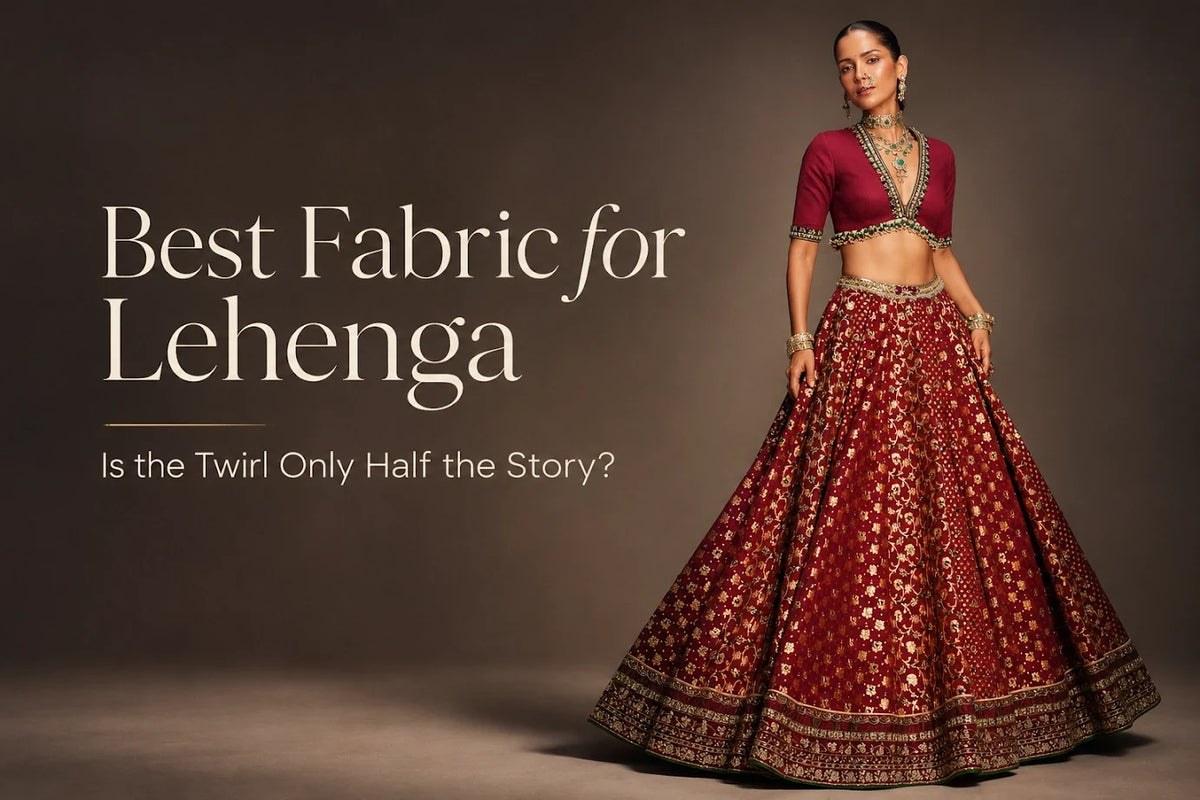
A lehenga can look spectacular in a three-second twirl and feel exhausting three hours later. The difference isn't just embroidery or flare. It's how the fabric carries weight, how the lining supports the silhouette, and whether the skirt moves without pulling at your waist.
Choosing the best fabric for lehenga means balancing structure, drape, breathability and comfort. From luxurious brocade for lehenga to delicate embroidered net fabric, the right material should look beautiful in photographs and feel equally good throughout the celebration.
What Is the Best Fabric for a Lehenga That Looks Good and Moves Well?
The best fabric for lehenga depends on the silhouette you want and how comfortably you can wear it. Brocade and structured silks create defined, voluminous skirts, while georgette offers softer, fluid movement. Organza and suitably supported embroidered net fabric can produce an airy, layered appearance.
But a lehenga that twirls beautifully isn't necessarily one that's comfortable to wear for hours.
The Three Things Your Lehenga Fabric Must Get Right
-
Shape: Does the fabric hold a dramatic flare or fall into soft, flowing folds? The right fabric for a flared lehenga depends on the intended silhouette.
-
Weight: Consider the complete garment, not just the outer fabric. Embroidery, lehenga lining fabric and supporting layers can significantly increase its weight.
-
Movement: Can you sit comfortably, climb stairs and dance without constantly adjusting the waistband or skirt?
Structure creates the silhouette, weight affects how the lehenga feels, and movement determines how comfortably you can enjoy wearing it. The best design balances all three.
A Lehenga Can Look Bigger Without Feeling Heavier. Here's How.
A lehenga with a dramatic flare doesn't necessarily need metres of heavy fabric. Sometimes, the most voluminous-looking skirts achieve their shape through clever construction rather than substantial outer material.
The Difference Between Flare, Volume and Weight
Imagine two equally dramatic lehengas.
The first uses brocade for lehenga, whose structured weave helps the skirt hold its shape naturally. The second combines a lightweight lehenga fabric with carefully positioned supporting layers to create similar fullness.
Both may photograph beautifully, but they'll feel and move differently.
Here's the distinction:
-
Flare: The skirt's fullness, determined largely by its pattern, cut and circumference.
-
Volume: How far the finished skirt stands away from the body, influenced by fabric stiffness and internal support.
-
Weight: The combined mass of the outer fabric, lining, embroidery, can-can and decorative trims.
More flare doesn't automatically mean more weight. And more volume doesn't necessarily mean better movement.
Does More Can-Can Automatically Mean a Better Lehenga?
Not necessarily. Can-can, typically made from stiff net, helps support the skirt and create a fuller silhouette. But adding more layers without considering their placement can make a lehenga bulky around the hips, uncomfortable when sitting and difficult to manage while walking.
Even a lightweight outer fabric becomes heavier once lining, stiff net and embellishments are added.
A well-constructed lehenga uses just enough support to achieve the intended silhouette, rather than relying on excessive layers for dramatic volume.
The Question Worth Asking Before You Choose the Fabric
“Do I want my lehenga to stand out or flow around me?”
If you want a sculpted, architectural silhouette, consider structured fabrics and carefully planned internal support. If you prefer graceful movement, explore softer fabrics that fall naturally and don't require excessive stiffening. The best fabric for lehenga isn't the one that produces the biggest twirl. It's the one that delivers your desired shape without compromising comfort throughout the celebration.
Brocade, Georgette or Embroidered Net: Three Beautiful Fabrics, Three Different Personalities
Two lehengas can have the same waist measurement, the same flare and equally beautiful embellishments—yet look completely different when worn.
One holds its shape like a sculpted silhouette. Another moves effortlessly with every step. A third creates drama through layers of embroidery and transparency.
That's why choosing the best fabric for lehenga isn't simply about picking the most luxurious material. It's about understanding what the fabric will do once it's cut, stitched and worn.
|
Fabric |
What It Brings to the Lehenga |
What to Consider |
|
Brocade |
Rich woven texture and a defined, structured silhouette |
Weight, stiffness and seam bulk |
|
Georgette |
Soft drape, flowing movement and relaxed flare |
May need support for dramatic volume |
|
Embroidered net |
Decorative transparency and layered dimension |
Lining, embroidery weight and backing |
|
Organza |
Crisp, airy-looking volume |
Sheerness, stiffness and layering |
|
Silk or silk blends |
Different degrees of body, lustre and drape |
Specific weave, weight and care |
Brocade for Lehenga: When You Want the Outfit to Make an Entrance
Some lehengas need elaborate surface embroidery to look grand. A beautifully woven brocade can create that richness through the fabric itself.
Brocade for lehenga features decorative patterns woven into the cloth, giving the material visual depth and, depending on its construction, enough body to support a defined silhouette.
It works particularly well for traditional bridal looks, structured A-line skirts and lehengas where the fabric's woven design is the main attraction.
But here's the trade-off: brocade with substantial weight or stiffness can become cumbersome in a heavily flared skirt. Multiple panels, gathered waistlines and thick seam allowances may introduce unnecessary bulk.
And not every brocade behaves alike. A lighter brocade may drape more softly, while a heavier construction can hold a more architectural shape.
Best suited for: Lehengas where rich texture, defined flare and a regal silhouette take priority.
Explore Tessuti's Brocade Fabrics to compare materials for your intended design.
Georgette: When You Want the Lehenga to Follow Your Movement
A georgette lehenga doesn't need to stand away from the body to make an impression. Its beauty comes from how the fabric falls and responds to movement.
Georgette's fluid drape makes it a practical option for panelled lehengas, softer flares and outfits designed for dancing, walking and extended celebrations. Rather than maintaining a rigid outline, the skirt tends to form flowing folds that shift naturally as you move.
However, there's an important distinction between a flowing lehenga and a voluminous one. If you want a dramatic skirt that projects outward even when you're standing still, georgette alone may not provide the necessary structure. Carefully selected lining or supporting layers may be required.
Its weight, opacity and fibre composition also matter, especially when the skirt includes embroidery.
Best suited for: Softer, movement-led silhouettes where fluidity matters more than a sculpted appearance.
Embroidered Net Fabric: When You Want Drama Without a Heavy-Looking Base
An embroidered net lehenga can appear almost weightless in photographs. The sheer background allows decorative motifs to stand out, creating visual depth without the solid appearance of a dense woven fabric.
But looking lightweight and feeling lightweight are two different things.
An embroidered net fabric may begin with a light base, but concentrated threadwork, sequins, beads or other embellishments can add considerable weight.
The finished result depends on several layers working together:
-
Net base: Provides transparency and supports the decorative work.
-
Embroidery: Adds texture, visual richness and potentially substantial weight.
-
Backing or support: Helps stabilise the fabric where the design requires it.
-
Lehenga lining fabric: Provides coverage, comfort and influences how the outer layer falls.
For heavily embellished designs, the construction must also account for seam strength, embroidery placement and how the weight is supported at the waist.
Best suited for: Bridal and occasion-wear lehengas where layered embroidery and decorative detail create the visual impact.
Explore Tessuti's Embroidered Fabrics to consider different decorative finishes and fabric bases.
So, Which Fabric Should You Actually Choose?
If you want your lehenga to hold its shape, consider brocade or another suitably structured material.
If you want it to move with you, georgette may offer the softer fall you're imagining. If you want decorative depth and layered drama, embroidered net can create a striking result - provided the supporting construction is planned carefully.
The deciding question isn't which fabric looks most expensive. It's which fabric gives your lehenga the silhouette, movement and comfort you want throughout the celebration.
The Embroidery Is Beautiful. But Who's Carrying Its Weight?
You fall in love with a lehenga covered in delicate zari, shimmering sequins and beautiful handwork. It looks stunning on the hanger. Even better in the mirror.
But a few hours into the wedding, you're holding up your skirt every time you walk, struggling to sit comfortably and wondering why something so beautiful feels so heavy.
Here's what we often overlook: embroidery doesn't just decorate a lehenga. It changes how the entire skirt feels and moves.
Why Heavy Embroidery Changes How a Lehenga Falls
Think of a lehenga with gorgeous stonework and a heavily embroidered border. Every bead, sequin and zari motif adds a little weight. Together, they can make quite a difference.
When most of that embroidery sits near the hem, it can pull the skirt downwards. Instead of holding the beautiful flare you imagined, the fabric may fall into heavier, straighter folds.
And if one panel carries significantly more embroidery than another, the skirt may not hang as evenly.
This matters especially when choosing a lightweight lehenga fabric. The material might feel feather-light on its own, but the finished outfit can tell a very different story.
Can Delicate Net Really Support Heavy Bridal Embroidery?
There's a reason embroidered net fabric looks so dreamy in bridal lehengas. The sheer background makes the embroidery appear almost as though it's floating. But there's one catch.
Just because a net looks beautiful with embroidery doesn't mean every net can carry heavy work on its own.
Think of it this way:
-
The net: Creates that delicate, airy appearance.
-
The backing: Helps support heavily embroidered areas so the fabric doesn't stretch or distort.
-
The lehenga lining fabric: Adds coverage, keeps rough embroidery away from your skin and helps shape the skirt.
-
The waistband and seams: Need to support the weight of the finished lehenga comfortably.
The goal isn't to pile on more layers. It's to choose the right support in the right places.
The Detail That Looks Beautiful but Can Ruin the Experience
Now imagine two brides wearing equally gorgeous embroidered lehengas.
Bride A chooses a skirt with heavy stones concentrated along the hem and delicate fabric underneath. It looks magnificent in photographs, but the border keeps pulling down, the skirt feels awkward while walking, and the embroidery catches against the lining.
Bride B chooses a similarly detailed design, but the embroidery is distributed more thoughtfully. The heavier sections have suitable support, the lining feels comfortable, and the waistband is constructed to carry the skirt's weight.
Both lehengas look beautiful. But their construction can make the wearing experience completely different.
Before choosing heavily embroidered bridal lehenga fabric, check a few small details:
-
Does the embroidery feel scratchy against your skin?
-
Can sequins catch on the dupatta or neighbouring fabric?
-
Is the heavy border pulling the skirt out of shape?
-
Does the embroidery make certain panels feel noticeably heavier?
Because the best fabric for lehenga isn't just about how gorgeous it looks when you enter the wedding venue. It's about still loving your outfit when you're dancing three hours later.
The Lining Is the Part Nobody Photographs. It's Also the Part You'll Feel All Evening.
You spend hours choosing the perfect lehenga colour, embroidery and flare. But how much thought goes into the fabric sitting right against your skin? That hidden layer can make the difference between dancing all night and counting the minutes until you can change.
Why Does a Beautiful Lehenga Sometimes Feel Uncomfortable?
Scratchy embroidered net fabric, rough embroidery backing and stiff can-can can rub against your legs as you move.
A good lehenga lining fabric creates a comfortable layer between your skin and the outer material. It also provides coverage and affects how the skirt falls. But lining adds weight and can make an outfit feel warmer, too.
Should a Bridal Lehenga Have a Soft or Structured Lining?
It depends on the look you're creating.
-
Soft, smooth lining: Helps the skirt feel comfortable and fall naturally.
-
Firmer lining: Can provide extra body for a more defined silhouette.
The cheapest lining isn't necessarily the best choice for an outfit you'll wear for hours.
Why Adding More Layers Isn't Always the Solution
More layers can mean better coverage and fuller flare, but also more warmth, bulk and restricted movement.
The outer fabric, lining and can-can should work together - not compete. Before stitching, ask your tailor three things: What touches my skin? What holds the flare? And do I really need every layer? Because the best fabric for lehenga deserves a lining that feels just as thoughtfully chosen.
Your Lehenga Passed the Twirl Test. But Can You Actually Enjoy the Wedding?
That perfect twirl in front of the mirror? Magical.
But weddings aren't just about standing beautifully for photographs. There's sitting through ceremonies, walking across the venue, greeting guests and, of course, dancing until your favourite song comes on.
The real test of a lehenga isn't how it looks for five seconds. It's how it feels after five hours.
Can You Sit Through the Ceremony Without Fighting Your Skirt?
Picture yourself sitting down for the wedding rituals, only to discover that your beautiful lehenga has turned into a mountain of fabric around you. This often happens when a skirt has excessive stiffness or can-can be positioned too high around the hips. Instead of settling comfortably, the layers bunch up and push against your waist.
A dramatic bridal lehenga fabric can create a gorgeous silhouette, but the internal construction needs to allow you to sit naturally.
Try this at your fitting: Sit on a chair, then try sitting on the floor if your ceremony requires it. Notice whether the waistband digs in, the skirt bunches awkwardly or the can-can feels uncomfortable.
Can You Walk Without Holding the Hem Every Few Seconds?
There's a difference between gracefully lifting your lehenga for a staircase and having to hold it up every time you take a step.
An overly long hem can get caught beneath your footwear. Excessive flare may create too much fabric around your feet, while heavily embroidered borders can make the skirt harder to manage. And even a lightweight lehenga fabric can become difficult to walk in if the length and construction aren't right.
When trying on your lehenga, wear your actual wedding footwear and walk at your normal pace. A beautiful flare should follow your movement, not make you constantly adjust your steps.
Does Your Lehenga Still Feel Comfortable After Several Hours?
A lehenga might feel perfectly manageable during a ten-minute trial. But the wedding itself is a different story.
Think about everything you're wearing together:
-
Skirt weight: Does the lehenga feel heavy around your waist after standing?
-
Waistband: Is it secure without digging into your skin?
-
Lining: Does the lehenga lining fabric feel comfortable against your legs?
-
Can-can: Can you move, sit and dance without fighting stiff layers?
-
Dupatta: Does its weight or draping pull uncomfortably on your shoulders or blouse?
Sometimes, it's not one particularly heavy element causing discomfort. It's the combined weight and construction of the entire outfit.
The fitting-room rule: Don't just stand, pose and twirl. Sit down. Walk around. Take a few dance steps. Try the movements you'll actually make at the wedding. Because choosing the best fabric for lehenga is only the beginning. The real magic is wearing an outfit that lets you enjoy every moment instead of worrying about every movement.
Your Lehenga Looks Gorgeous in Motion. But Can It Keep Up on the Dance Floor?
That slow-motion twirl looks dreamy. But one perfect spin doesn't tell you how your lehenga will behave when the music gets faster.
Why a Gorgeous Twirl Doesn't Tell You Everything
A skirt might flare beautifully during a single turn but feel awkward during repeated movement. Heavy borders can pull it down, stiff can-can may restrict your steps, and excessive length can get caught underfoot. Even a lightweight lehenga fabric won't guarantee effortless dancing if the finished garment has bulky supporting layers.
Five Moves to Try Before Your Final Fitting Is Over
Before approving your lehenga, put it through this mini dance-floor rehearsal:
-
Walk: Take normal steps. Does the hem get in your way?
-
Sit: Check whether the lining or can-can bunches uncomfortably.
-
Climb: Try a step safely. Can you lift your feet without catching the skirt?
-
Turn: Watch how the flare opens - and whether it settles smoothly afterwards.
-
Dance: Try a few familiar steps. Does the waistband stay secure while the skirt moves freely?
The real test? Your lehenga should move with you, not demand your attention every few seconds. Because the best fabric for lehenga is part of a beautifully constructed outfit that lets you forget about your clothes and enjoy the celebration.
Your Lehenga Might Feel Light. But What About the Dupatta?
You've found a lehenga that feels comfortable, looks gorgeous and has just the right flare. Then comes the dupatta - with its heavy border, intricate embroidery and a weight you hadn't planned for.
Why a Heavy Dupatta Can Change the Entire Outfit
A heavily embellished dupatta can pull on your shoulders, strain your hairstyle or become uncomfortable when draped over your head. And remember, you're wearing the lehenga, blouse and dupatta together. Their combined weight matters more than how light each piece feels separately.
Should the Dupatta Be the Same Fabric as the Lehenga?
Not necessarily! A structured brocade lehenga can look beautiful with a lighter net or georgette dupatta. The contrast can soften the overall look and make draping easier. Just ensure the fabric, embroidery and border complement your outfit.
The Bridal Draping Question Worth Settling Early
“Will my dupatta stay on my shoulder, be pinned to my blouse or sit over my head?”
Decide before your final fitting. A head-draped dupatta may need lighter fabric and carefully balanced borders, while shoulder draping requires secure, comfortable placement. Because the best bridal look isn't just about how the dupatta falls in photographs. It's about how comfortably it stays in place throughout the wedding.
One Lehenga for the Wedding, Another for the Dance Floor? Here's Why It Matters.
A lehenga that feels perfect during your wedding ceremony might feel like too much to handle at your sangeet.
Why? Because sitting through rituals, dancing to Bollywood favourites and greeting guests for hours are three completely different experiences. The best fabric for lehenga isn't just about the occasion. It's about what you'll actually be doing in it.
|
Occasion |
What Your Lehenga Needs to Handle |
Fabric Worth Considering |
|
Bridal ceremony |
Long rituals, sitting and elaborate draping |
Structured silk, brocade or well-supported embroidered fabrics |
|
Sangeet |
Dancing, turning and constant movement |
Fluid georgette or suitably constructed lightweight fabrics |
|
Reception |
Walking, photographs and hours of socialising |
A polished silhouette without excessive weight |
|
Engagement |
Comfort with a dressed-up feel |
Softly structured or flowing fabrics |
|
Wedding guest outfit |
Travel, movement and possible repeat wear |
Comfortable fabrics with manageable embellishments |
Why the Most Elaborate Lehenga Isn't Always the Right One
A heavily embroidered bridal lehenga fabric can create a breathtaking entrance. But the same heavy borders and stiff layers might make dancing difficult. For a ceremony, you may happily choose a grand, structured silhouette. For a sangeet, you'll probably appreciate a skirt that moves with every step. Tessuti's season-wise festival and wedding fabric guide also explains how climate and occasion influence your fabric choice. The occasion matters, but your movement matters more.
What If You Want One Lehenga for Multiple Functions?
Choose a comfortable base lehenga with manageable weight and a silhouette that doesn't depend on excessive can-can. Then change the mood with a statement blouse, a different dupatta or jewellery.
A softer skirt can feel festive for a mehendi and glamorous for a reception with the right styling. Explore Tessuti's Wedding Fabrics to find materials that suit both your dream look and your celebration plans. Because the smartest lehenga is one you can wear more than once - and still be excited to wear again.
Love the Lehenga Fabric? Ask Your Tailor These Six Questions Before Buying It.
You've found the perfect fabric. The colour is gorgeous, the embroidery is everything, and you've already imagined your bridal look.
But before you order several metres, have one conversation with your tailor. It could save you from a lehenga that looks nothing like you imagined - or costs far more than you planned.
Six Questions That Can Save Your Dream Lehenga
-
Will this fabric give me the flare I want? Does it hold its shape naturally, or will I need can-can and extra layers?
-
How heavy will the finished lehenga be? Include the embroidery, lining, borders and supporting layers—not just the outer fabric.
-
Can this fabric handle my embroidery? Delicate embroidered net fabric may need backing or reinforcement for heavy stonework.
-
What lining will feel comfortable? Choose lehenga lining fabric that provides coverage without making the skirt unnecessarily warm or bulky.
-
How many metres do I actually need? A panelled lehenga, circular skirt and heavily flared design can have very different fabric requirements.
-
Can we test how the fabric falls? For an expensive project, examine a generous sample or trial skirt before final cutting.
Use Tessuti's Fabric Requirement Calculator for an initial estimate, then confirm the quantity with your tailor.
Why the Cheapest Metre Isn't Necessarily the Best Deal
A cheaper fabric might need extra lining, more can-can or reinforcement to achieve the look you want. And an expensive bridal lehenga fabric isn't automatically more comfortable.
Compare the cost of the finished lehenga, not just the fabric price. Because the best fabric for lehenga isn't necessarily the one you fall in love with first. It's the one that brings your dream design to life without unpleasant surprises.
The Best Fabric for Lehenga Makes Every Moment Beautiful, Not Just the Twirl
The right lehenga gives you that magical mirror moment - and lets you walk, sit and dance comfortably. Explore Wedding Fabrics and Embroidered Fabrics at Tessuti. Because the best lehenga isn't just the one everyone remembers. It's the one you loved wearing.
Frequently Asked Questions About the Best Fabric for Lehenga
1. What is the best fabric for a bridal lehenga that looks grand but feels comfortable?
The best fabric for lehenga depends on the flare, embroidery and comfort you want. Brocade and structured silk create a rich, traditional silhouette, while georgette offers softer movement. Organza and embroidered net can create beautiful layered looks.
But don't judge the outer material alone. The lining, can-can, embellishments and waistband determine how comfortable your finished lehenga feels. Explore Tessuti's Bridal Fabric Collection to compare materials for your wedding outfit.
2. Which fabric gives a lehenga a beautiful flare without making it too heavy?
Organza, lightweight structured silk and suitably supported net can create impressive volume without relying on a heavy outer fabric.
Organza naturally holds a crisp, airy shape, while softer materials may need additional support. Remember, though, every layer adds some weight. The secret is choosing the right skirt cut and enough structure to achieve the desired flare—not simply adding more can-can. Explore Organza Fabrics at Tessuti for lighter, structured options.
3. Is georgette a good fabric for a lehenga you plan to dance in?
Yes, georgette is a lovely choice for a sangeet or dance-heavy celebration because of its soft drape and fluid movement. Unlike stiff fabrics, georgette tends to move naturally around the legs, making it suitable for relaxed flares and panelled skirts. However, an overly long hem, heavy embroidery or bulky lining can still make dancing difficult. Browse Tessuti's Georgette Fabrics to explore different weights and finishes.
4. Is brocade too heavy for a bridal lehenga?
Not always! Brocade for lehenga can create a beautifully structured silhouette without requiring elaborate additional embroidery. However, brocade varies in weight and stiffness. A substantial brocade with a very large flare may feel heavier and create bulky seams, while a lighter version can be more manageable. Before buying, check the material's weight, thickness and drape. Tessuti's Brocade Fabric Guide explains the characteristics worth comparing.
5. Which is better for a lehenga: organza or net fabric?
Choose organza for a crisper, more structured appearance and net for sheer, layered effects.
Organza tends to stand away from the body, creating an airy-looking silhouette. Soft net offers a more delicate appearance, while stiff net can also contribute volume. Both generally need thoughtful lining or layering, depending on the design. If you're considering net, Tessuti's Net and Lace Fabric Guide explains the differences between soft and stiff constructions.
6. Is embroidered net fabric actually lightweight?
The net itself may be lightweight, but a heavily embroidered net lehenga isn't necessarily light to wear. Zari, sequins, stones and beadwork can add considerable weight, particularly when concentrated around the hem. Backing, lining and supporting layers also contribute to the finished skirt's weight. Before choosing Embroidered Fabrics at Tessuti, consider the embroidery density and ask your tailor how the complete garment will be supported.
7. What is the best lining fabric for a bridal lehenga?
The best lehenga lining fabric should feel comfortable against your skin, provide suitable coverage and complement the outer fabric's drape.
Smooth satin-type linings, suitable crepe and some breathable cotton-based materials may work, depending on the design. A heavily embroidered lehenga may also need separate reinforcement or supporting layers. Don't choose lining only by price. It's the fabric you'll feel against your skin throughout the celebration.
8. Is can-can necessary for every lehenga?
No, not every lehenga needs can-can. It depends on whether you want the skirt to stand outward or fall naturally. Structured fabrics may provide enough body on their own, while fluid georgette can create beautiful movement without a dramatically stiff silhouette. Can-can is useful when extra volume is desired, but excessive layers can make sitting and walking uncomfortable. Ask your tailor to show you the intended flare before deciding how much support to add.
9. Can delicate net support heavy zari, stonework and bridal embroidery?
Delicate net shouldn't automatically be expected to support heavy embellishments without reinforcement. Dense zari, beads and stones can pull on the mesh, causing distortion or strain around seams. Depending on the design, your tailor may use suitable backing, reinforced seams or additional supporting fabric to distribute the weight. For heavily embroidered bridal lehenga fabric, examine the sample's construction - not just how beautiful the embroidery looks.
10. Which lehenga fabric is best for a summer wedding in India?
Georgette, suitable lightweight silk and thoughtfully lined organza are worth considering for summer weddings. But the weather isn't the only factor. A breathable outer fabric can still feel warm when combined with dense embroidery, thick lining and multiple can-can layers.
For outdoor daytime functions, prioritise manageable weight, airflow and easy movement. Use Tessuti's Fabric Finder to explore materials according to garment type, weather and preferred appearance.
11. Is velvet a good choice for a winter bridal lehenga?
Yes, velvet can create a rich, luxurious bridal look for winter weddings and cooler evening functions.
Its soft pile gives colours a beautiful depth, making it particularly attractive for traditional and reception outfits. However, velvet can feel warm and substantial, especially when combined with heavy embroidery and multiple layers.
If you're planning an indoor celebration, consider the venue temperature too. Explore Tessuti's Velvet Collection for different velvet textures and finishes.
12. How many metres of fabric are needed to stitch a flared lehenga?
A flared lehenga skirt may require approximately 4–5 metres of fabric at a width of 44 inches (112 cm). This is a starting estimate, not a universal requirement. A circular lehenga, multiple-kali design or extra-long skirt may need more material. The blouse, dupatta, lining and supporting layers must be calculated separately. Use Tessuti's Fabric Requirement Calculator, then confirm the quantity against your tailor's cutting plan.
13. Should the dupatta be made from the same fabric as the lehenga?
Not necessarily. Matching the fabric is a design choice, not a requirement. A structured brocade or silk lehenga can look gorgeous with a softer georgette, chiffon or net dupatta. The contrast can also make the complete outfit easier to manage. If you're planning to drape the dupatta over your head, pay particular attention to the fabric's weight and border embellishment. Even a beautiful dupatta becomes distracting if it constantly slips or feels uncomfortable.
14. How can I stop a heavy bridal lehenga from pulling at my waist?
A heavy lehenga needs a properly fitted, supportive waistband and balanced weight distribution. If the skirt's embroidery, borders and supporting layers place excessive strain on the waist, the lehenga may slip, dig into your skin or become uncomfortable while standing. Ask your tailor about suitable waistband construction, secure fastenings and how the skirt's weight will be supported. During your fitting, sit, walk and dance briefly to check whether the waistband stays comfortably in place.
15. What should I check before buying lehenga fabric online?
Before buying lehenga fabric online, check its composition, GSM, width, drape, opacity and embellishment details.
For embroidered fabrics, look closely at the density and placement of decorative work. For sheer fabrics, plan the lining before ordering. A physical swatch, when available, can help you assess texture, colour and movement.
Tessuti's GSM Chart is a useful starting point for understanding fabric weight. Don't imagine only how your lehenga will look in the mirror. Imagine sitting through the ceremony, walking towards the stage and dancing to your favourite song. That's when you'll know whether you've chosen the right fabric.
Comments