
Types of Satin Fabric Wholesale: Satin Lycra, Korean, Crepe & Cupro Compared
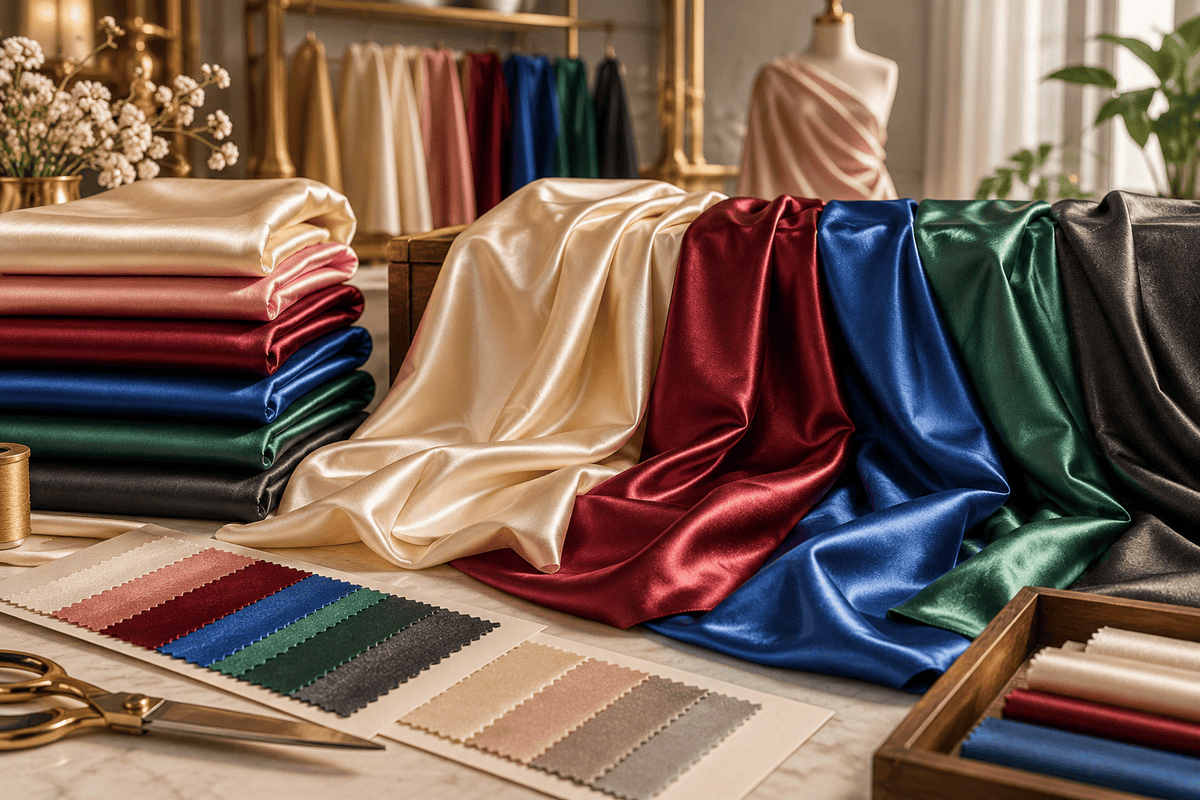
Two satin fabrics can look identical on the roll but behave completely differently once cut. One stretches around the body, another holds its shape, while a third falls into soft, flowing folds.
That's because satin is a weave, not a single fabric. Tessuti's collection ranges from ₹290 Satin Lycra to crushed party satin, breathable cupro, and burnt-out silk.
Whether you're sourcing satin fabric wholesale for a collection or comparing options from a satin fabric supplier, appearance alone isn't enough. We've brought together 13 Tessuti satins to compare their stretch, weight, shine, and drape, so you can choose the right fabric before cutting begins.
Why Two Satins Can Behave Like Completely Different Fabrics
Two satin fabrics can look almost identical on a swatch card but behave very differently once stitched. Understanding how satin weave affects shine and texture helps explain why similar-looking fabrics can produce different results. One falls beautifully over the body, while another feels stiff, clings awkwardly or traps heat. When buying satin fabric wholesale, understanding these differences matters more than choosing the shiniest option.
1. Fibre composition
Polyester, cupro, cotton and silk all produce different wearing experiences. Silk and cupro can offer better moisture management than conventional polyester, while cotton satin feels different again. In a Delhi June, that difference can determine whether an outfit stays comfortable or feels unbearably warm.
2. Yarn weight (denier)
Denier tells you how fine a yarn is. A 30D yarn is finer than a 50D yarn and, with similar construction, can produce a lighter, more fluid fabric. This matters when choosing satin for flowing gowns rather than structured silhouettes.
3. Stretch and flexibility
Satin with Lycra has give, making fitted dresses easier to wear and move in. Non-stretch satin needs more careful fitting and often a fastening. For satin Lycra fabric bulk orders, stretch recovery matters as much as initial flexibility.
4. Back and face
Plain-backed satin and crepe-backed satin feel different. Crepe-backed varieties combine a glossy face with a textured reverse, offering two possible looks depending on the fabric's construction.
5. Surface finish
Smooth, wave, crushed and burnout finishes change how satin reflects light, holds texture and appears on the finished garment.
Whether you're considering silk satin fabric wholesale or comparing options from a satin fabric manufacturer in India, ask your satin fabric supplier for samples before committing to quantity.
The Satins on Our Table, Grouped by How They Behave
When comparing satin fabric wholesale options, start with how the fabric stretches, falls, holds its shape or handles heat. The satin finish alone tells you very little about how a garment will look once cut and stitched. These comparisons focus on practical differences that matter during sampling and production. Check each fabric’s composition, width and price per metre across Tessuti's range of woven satins before ordering bulk quantities from a satin fabric supplier.
The Stretch Satins: For Close Fits and Body-Hugging Silhouettes
Luxury Satin Lycra feels smooth and supple, with stretch that helps fitted garments follow the body. Its forgiving fit, colour range and value make it a popular option for bodycon dresses, corset-style tops and saree blouses. Orient Satin Lycra costs an additional ₹100 per metre, but whether that difference is worthwhile depends on the actual swatch test for stretch, recovery, weight and finish. For both, use a ballpoint or stretch needle and avoid pulling the fabric while sewing seams. Compare the price per metre before committing to satin lycra fabric bulk orders.
The Fluid Satins: For Slips, Shirts and Bias-Cut Designs
Korean Satin is a market name commonly used for soft, fluid satin; it does not guarantee Korean manufacture. Habutai Satin can be made from silk or polyester, so check the fibre composition rather than relying on the name. 30D Chiffon Satin offers the lightest feel of these options, making it suitable for scarves, kaftans, wrap shirts and flowing co-ords. Its sheerness may require lining, especially in lighter colours. All three can be slippery to cut. Use pattern weights and tissue paper, and check bias seams for slippage before finalising the pattern.
The Structured Satins: For Tailoring and Defined Shapes
50D Satin has more body and can hold pleats more readily than lighter, fluid satins. Twill Satin combines a satin sheen with a subtle diagonal texture, making it worth considering for tailored shirts and trousers. Crepe Satin offers two usable surfaces: a matte crepe side and a shinier satin side, which can create contrast between a bodice and its trims. These fabrics suit A-line skirts, structured shirts, trousers and jackets, but their weight and drape still need to match the pattern. Test pleats and seams on a swatch first.
The Textured Satins: For Eveningwear with More Surface Interest
Wave Satin has a patterned surface that breaks up reflected light, making minor creases and handling marks less obvious than on some smooth, shiny fabrics. Double Satin Crush adds an intentionally crinkled appearance, giving cocktail dresses, party co-ords and statement dupattas more texture without relying on embellishment.The trade-off is that texture can change during care. Before ordering for a production run, wash and press a sample according to the intended care instructions to check whether the crushed effect survives. Do not assume the finish will remain unchanged.
The Breathable Options: For Indian Weather and Daywear
Cupro Satin has a soft, peachy lustre rather than the sharper shine associated with some polyester satins. Cupro can feel more breathable and moisture-managing than conventional polyester, although the final performance depends on the fabric construction. Cotton Satin with a Giza finish offers a smoother, more understated sheen, making it suitable for shirts, kurtas and summer trousers. These options are worth sampling for daytime wear and warm-weather occasions. Check fibre composition carefully, as the word satin describes a weave or finish, not a guarantee of natural fibres or cooling performance.
The Statement Satin: For Sheer Patterns and Layered Designs
Silk Satin Burnout combines a satin surface with transparent patterned areas created by chemically dissolving selected fibres in a blended fabric. The contrast adds depth to jackets, dupattas and overlays without requiring an all-over print. Tessuti's printed Silk Satin Burnout offers a product example of this statement finish. Its appeal lies in the interplay between solid and sheer sections, but those areas may have different handling and care requirements. Confirm the fibre composition and care instructions before cutting, and test pressing on a sample to avoid damaging the surface. For silk satin fabric wholesale, verify that the product is genuinely silk rather than assuming the name confirms its composition.
Fluid or Fitted? How to Choose Satin for Your Silhouette
The silhouette you want to create is a useful starting point when comparing satin fabrics. Some satins skim the body and create soft folds, while others offer the structure or stretch needed for a more defined fit.
If you’re making a bias-cut slip dress or cowl-neck top, consider Korean Satin, Habutai Satin or 30D Chiffon Satin. Their fluid drape works well for designs that fall softly against the body. Check opacity before cutting, as lightweight options may need lining.
If you’re making a fitted blouse or bodycon dress, Luxury Satin Lycra and Orient Satin Lycra are worth considering.. Their stretch accommodates close-fitting silhouettes, making them useful for saree blouses, corset-style tops and dresses. Test stretch recovery and use a suitable needle to avoid wavy seams. If you need satin lycra fabric in bulk, compare both options on recovery, finish and price per metre before ordering.
If you’re making wide-leg trousers or a co-ord set, look at Twill Satin, 50D Satin or Crepe Satin. These offer different levels of body and texture for more defined silhouettes. Check how the fabric hangs when worn and whether it creases easily, particularly around the knees and waistband.
If you’re designing evening wear for a long night, Wave Satin and Double Satin Crush bring surface texture that makes minor creases less noticeable. However, the crushed finish may change with washing or pressing, so test a swatch before committing to the design.
If you’re dressing for a summer wedding or daytime function, Cupro Satin and Cotton Satin are worth sampling. Their feel and moisture-handling properties may suit warm-weather outfits better than conventional polyester satin, depending on the fabric construction and fibre blend.
If you’re creating a statement jacket or dupatta, Silk Satin Burnout adds sheer, patterned areas that create visual interest without relying on prints or embellishment. Check the fibre composition and care requirements, especially if the design includes delicate transparent sections.
Where Satin Fits into Indian Occasion Wear
Satin works across festive wardrobes, from lehenga skirts and saree blouses to occasion kurtas. For lehengas, assess whether the fabric has enough body for the intended flare. For saree blouses, prioritise fit, stretch and seam stability. For kurtas, consider drape, comfort and how much shine suits the occasion.
When comparing options from a satin fabric supplier or a satin fabric manufacturer in India, request swatches and confirm composition, usable width, colour availability and price per metre. Whether you’re sourcing satin fabric wholesale for a new collection or exploring silk satin fabric wholesale for statement pieces, test the fabric in the intended garment before placing a bulk order.
Before You Order: Six Checks Worth Two Minutes
Before placing a satin fabric wholesale order, test a swatch. These six checks can help prevent surprises during stitching and production.
-
Light test: Hold it against a window to check transparency and decide whether lining is needed.
-
Pinch test: Gently pull the seam allowance. If threads shift apart, seam slippage may be a concern.
-
Stretch check: Test lengthwise and crosswise stretch. This affects pattern placement and fit.
-
Water-drop test: Check for water spots before using steam or pressing.
-
Scratch test: Lightly run a fingernail over the surface to check for snags, especially before embellishment.
-
Width check: Tessuti lists satin fabrics in widths from 110 cm to 150 cm and beyond. Use the fabric requirement calculator to estimate your metreage using the actual fabric width before placing a bulk order.
Planning a bulk order? Request swatches from your satin fabric supplier to check drape, colour and finish before committing to satin lycra fabric bulk or silk satin fabric wholesale.
Sewing Satin Without Tears
Satin’s smooth surface and fluid drape make it beautiful to wear, but they can be tricky to handle at the sewing table. A few workroom adjustments can help you get cleaner seams and a better finish.
1. Match the needle to the fabric. Use a fine, sharp needle for woven satins and a stretch needle for Lycra blends. The right needle helps reduce skipped stitches, snags and damage to delicate fibres.
2. Cut one layer at a time. Satin can shift when several layers are stacked. Use pattern weights and a sharp rotary cutter where suitable to keep edges aligned without unnecessary pin marks.
3. Finish fluid fabrics carefully. French seams can enclose raw edges neatly on lightweight satins, provided the fabric and seam allowance suit the technique.
4. Press with protection. Work from the wrong side using a pressing cloth and test the iron temperature on a swatch first.
Whether sourcing satin fabric wholesale or ordering satin lycra fabric in bulk, test your sewing method before cutting production quantities.
Choosing the Right Satin Fabric for Your Next Design
The difference between a dress that falls beautifully and one that clings in the wrong places often comes down to the satin you choose before the first cut. The finish may catch your eye, but the weight, stretch and drape determine how it behaves once stitched. Whether you're designing a fluid slip, a fitted blouse or a statement lehenga, start with the silhouette, then compare fabrics against your design. Before committing to satin fabric wholesale, order swatches of the two or three options that suit your pattern and see how they perform.
Order satin swatches from Tessuti →
Frequently Asked Questions About Satin Fabric Wholesale
1. What should you check before buying satin fabric wholesale?
Before ordering satin fabric in bulk, check its fibre composition, weight, width, stretch and surface finish. Two fabrics may have a similar shine but behave differently after stitching. Ask for a sample, check how it drapes and confirm whether the same shade and quality can be supplied throughout your production order.
2. Which satin fabric is best for making gowns in bulk?
For flowing gowns, lightweight satin with a soft drape is often a good choice, while heavier satin can provide more structure. Explore these fabric options for gowns to compare other materials for your design. Satin Lycra may work better for fitted silhouettes that need stretch. When sourcing satin fabric for gowns wholesale, consider the gown's cut, lining requirements and movement before selecting a fabric.
3. Is satin Lycra better than regular satin for fitted garments?
Satin Lycra is generally more suitable for body-hugging designs because it stretches and allows greater freedom of movement. Regular non-stretch satin can create elegant, structured silhouettes but usually needs more precise fitting. When buying satin Lycra fabric in bulk, check its stretch percentage, recovery and consistency across samples.
4. Which satin fabric is suitable for night suits and sleepwear?
For night suits, comfort matters as much as appearance. Compare these fabric options for nightwear before deciding which satin or alternative fibre suits your intended use. Lightweight satin with a smooth surface is commonly used for sleepwear, but fibre composition affects breathability and moisture management. When sourcing satin fabric for night suits in bulk, compare polyester, cupro and silk options, and check how they feel against the skin after washing.
5. What is the difference between silk satin and polyester satin?
Silk satin is made using silk fibres, while polyester satin uses synthetic fibres. Silk satin generally offers different moisture-handling properties and a distinctive feel, but often costs more and requires careful maintenance. Polyester satin is usually more affordable and easier to care for. For silk satin fabric wholesale, always verify the fibre composition rather than relying on appearance alone.
6. Why do satin fabric wholesale prices vary between suppliers?
Wholesale satin prices depend on fibre composition, yarn quality, fabric width, weight, finish and order quantity. Silk satin, polyester satin and satin Lycra can have very different price points. Compare the usable fabric width, specifications and price per metre before choosing a satin fabric supplier. The lowest quoted price does not necessarily mean the lowest cost per garment.
7. Is buying satin from a manufacturer different from buying through a supplier?
A satin fabric manufacturer in India produces fabric, while a supplier may source and stock multiple varieties from different mills. Manufacturers may be suitable for specific production requirements, while suppliers can offer access to a broader selection. Whichever route you choose, confirm minimum order quantities, sample availability, shade consistency and delivery terms.
8. How can you check satin fabric quality before placing a bulk order?
Start with a physical sample rather than relying on product photographs. Check the fabric's drape, opacity, surface consistency and stitching behaviour. A wash test can help identify shrinkage or colour changes, while stretch satin should also be checked for recovery. For large orders, confirm that the approved sample matches the fabric being supplied.
9. Where can you find a satin fabric wholesaler in Delhi?
Delhi's Nehru Place is home to fabric sourcing businesses, including Tessuti, located at Howe India House. Tessuti offers satin varieties such as Satin Lycra, Cupro Satin, Cotton Satin and printed Korean Satin. Buyers can explore the available collection and enquire about bulk quantities, fabric specifications and current stock before placing an order.
10. What is the minimum order quantity for satin fabric wholesale?
Minimum order quantities (MOQs) vary depending on the satin fabric supplier, fabric type, colour and stock availability. Ready-stock fabrics may be available in smaller quantities, while custom colours or finishes often require larger commitments. Before ordering, confirm the MOQ for each colour and whether repeat orders will be possible.
11. Does fabric width affect the cost of buying satin in bulk?
Yes. Fabric width affects how efficiently garment pieces can be cut, making it an important consideration when comparing satin fabric wholesale prices. A wider fabric may reduce cutting waste, depending on the pattern. Compare the usable width and estimated fabric consumption per garment rather than looking only at the price per metre.
12. Which satin fabric works well for bias-cut gowns?
Bias-cut gowns need satin that drapes smoothly without excessive stiffness. Lightweight, fluid satin is often worth considering because it can follow the body's natural shape. When exploring satin fabric for gowns wholesale, check how the material hangs on the bias, whether it stretches out during handling and how visible the seams become.
13. Can satin Lycra be used instead of regular satin for garment production?
Satin Lycra can replace regular satin in some designs, but the garment pattern may need adjustments. Its stretch changes how closely the fabric fits and moves around the body. Before purchasing satin Lycra fabric in bulk, test its stretch recovery and stitching behaviour, particularly for fitted dresses, gowns and coordinated sets.
14. What information should you share with a satin fabric supplier before requesting a quotation?
Tell your supplier the intended garment, required quantity, preferred fibre, fabric width, colour, stretch requirements and delivery timeline. Providing a reference sample or technical specification can help avoid misunderstandings. A clear sourcing brief also makes it easier to compare quotations from different satin fabric suppliers on equal terms.
15. Can you order custom colours directly from a satin fabric manufacturer in India?
Some satin fabric manufacturers in India offer custom dyeing for sufficiently large orders, although availability depends on production capacity, fabric composition and minimum quantities. Custom shades may require lab dips, colour approval and additional lead time. Always confirm these requirements before committing to a collection's colour palette.
16. How can fashion brands maintain colour consistency across repeat satin orders?
For repeat orders, retain an approved fabric sample and record the colour reference, composition, finish and supplier details. Different dye lots can show slight shade variations, even when the colour name remains unchanged. Ask your satin fabric supplier about batch availability and compare new samples with the original under consistent lighting.
17. What should buyers know before sourcing silk satin fabric wholesale?
When considering silk satin fabric wholesale, verify the actual silk content, fabric weight, usable width and care requirements. Not every fabric sold as silky satin contains silk. Genuine silk satin may also require more careful handling and cleaning, making sample testing particularly important for bridalwear, luxury garments and larger production orders.
Comments