
Best Fabric for Kurta: The 9 AM to 6 PM Test for Everyday Wear
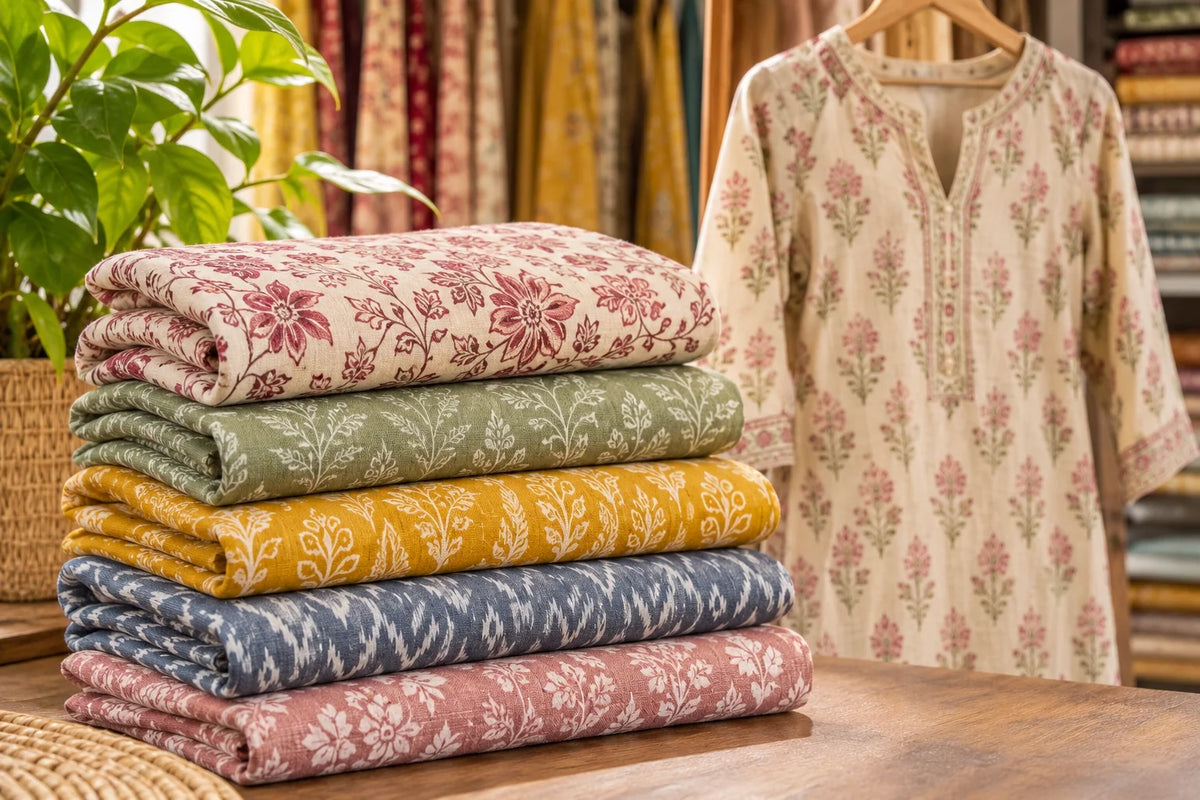
A kurta rarely spends its day standing in front of a mirror. It bends at the waist, gathers at the lap, faces a humid commute and still has to look polished by evening. That is where fabric choice reveals itself. Cotton, poplin and rayon can all make beautiful kurtas, but they hold their shape, develop creases and drape differently. Choosing the best fabric for kurta starts with understanding how the material behaves throughout the day, not just when freshly pressed.
What Is the Best Fabric for a Kurta You Can Wear All Day?
The best fabric for kurta depends on how you want it to look and feel. Breathable cotton fabric for kurtis offers everyday versatility; poplin fabric for kurtas creates a crisp, defined silhouette, while rayon kurta fabric delivers a softer, flowing drape. Fabric weight, weave, cut, lining and finishing influence comfort and appearance.
The Three Questions to Ask Before Choosing
-
Structure or flow? Should the kurta hold its shape or fall softly?
-
What's your day like? Consider heat, humidity and movement.
-
How much maintenance? Factor in creasing, ironing and washing.
Cotton, Poplin or Rayon: Which Fabric Holds Up Best Through the Day?
The best fabric for a kurta depends on what you expect it to do after hours of sitting, commuting and moving around. Cotton prioritises breathability, poplin offers a cleaner silhouette, and rayon brings fluidity.
|
Fabric |
Feel and appearance |
Main advantage |
What to watch |
|
Cotton |
Soft to crisp, depending on weave |
Breathability and versatility |
Creasing and shrinkage |
|
Cotton poplin |
Smooth and structured |
Defined collars, plackets and straight cuts |
Less fluid drape; possible creasing |
|
Rayon (viscose) |
Soft and flowing |
Graceful movement |
Shrinkage and care sensitivity |
Cotton Fabric for Kurtis: The Everyday All-Rounder
Cotton fabric for kurtis works particularly well in India's warmer conditions because it absorbs moisture and allows comfortable everyday wear.
But cotton isn't one uniform material. Fine cambric creates a lighter, smoother garment, while denser weaves provide more body and coverage. The trade-off? Cotton can crease noticeably, especially around the lap and elbows. Choose fabric weight according to the desired silhouette and opacity, not softness alone.
Poplin Fabric for Kurtas: When You Want a Crisp Look
Poplin fabric for kurtas has a closely woven structure that supports sharp collars, clean plackets and straight-cut silhouettes.
It's particularly effective for office kurtas that need a polished appearance. However, poplin describes a weave, not a fibre: cotton and blended versions behave differently. It also won't provide the same fluid movement as rayon kurta fabric.
Explore Poplin Fabrics at Tessuti for structured everyday designs.
Rayon Kurta Fabric: When You Want a Softer Fall
-
Explain how rayon or viscose creates graceful movement in A-line, relaxed and gathered styles.
-
Discuss softness and drape without promising superior crease resistance.
-
Mention shrinkage risks, wet-fabric sensitivity and the importance of appropriate washing.
Crisp or Flowy? Let the Kurta's Silhouette Decide
A fabric that makes a straight kurta look beautifully tailored can make a flared one feel unnecessarily stiff. The best fabric for kurta isn't just about comfort; it's about how the material supports the cut.
What Works for Straight-Cut and Collared Kurtas?
Cotton poplin and structured cotton weaves provide the body needed for defined collars, neat button plackets and straight hems. However, even good poplin fabric for kurtas benefits from appropriate interfacing and accurate fitting to maintain a sharp finish.
Which Fabrics Suit A-Line and Flared Kurtas?
Rayon kurta fabric and softer cotton weaves allow gathers and flared panels to fall naturally. Stiffer materials may push the silhouette outward, creating unwanted bulk instead of graceful movement.
Why Does Drape Matter More Than the Fabric Name?
Two cotton fabrics can behave entirely differently because of their weave, weight and finishing.
Before stitching, drape a length over your hand or shoulder. Does it fall into soft folds or hold a firm shape? A tailored office kurta and a gathered weekend kurta may share measurements, but they shouldn't necessarily share fabric.
Choosing Kurta Fabric for Indian Weather: Heat, Humidity and Air-Conditioning
Your morning commute and your office may feel like two different seasons. The best fabric for kurta should accommodate both, without compromising comfort or appearance.
What Works for Hot, Dry Weather?
Lightweight, breathable cotton fabric for kurtis is a practical choice. Its moisture absorbency helps with perspiration, while a relaxed cut allows better airflow. Heavy fabrics, tight fits and multiple layers can make an already hot afternoon uncomfortable.
What About Humid Days and Long Commutes?
Humidity changes the equation. Absorbing sweat isn't enough; how quickly the fabric dries also matters. Lightweight cotton and rayon kurta fabric can feel comfortable, but their weave, thickness and fit determine whether they cling when damp.
What If You Spend Most of the Day in an Air-Conditioned Office?
Moderate-weight cotton or poplin fabric for kurtas offers a defined silhouette without excessive layering.
For example, if you're travelling through Mumbai's humidity before entering a chilled office, a breathable kurta with a removable light layer is generally more practical than choosing heavy fabric for the entire day.
The See-Through Problem: How to Check Kurta Fabric Opacity Before Buying
A fabric may look perfectly opaque when folded, only to reveal more than expected against daylight. This is especially worth checking with lighter shades.
Why Are Some Light-Coloured Kurtas More Transparent?
Opacity depends on fabric weight, weave density and colour. A lightweight cotton or rayon may offer less coverage in a single layer, even if it looks substantial on the roll.
How Can You Test Opacity Before Stitching?
-
Hold a single layer against natural light.
-
Place it over a dark surface to check visibility.
-
Gently move or stretch it to assess coverage.
-
Compare the fabric with its intended lining.
Does Adding a Lining Affect Comfort?
Lining improves coverage but can introduce warmth and bulk. For everyday wear, compare lightweight lining options before committing to a full, heavy lining.
Which Kurta Cuts Work Best With Different Fabrics?
Even the best fabric for kurta can disappoint when paired with the wrong silhouette. The trick is choosing fabric that complements the cut rather than working against it.
|
Kurta style |
Recommended fabric |
Why it works |
|
Straight-cut office |
Cotton poplin or structured cotton |
Maintains a clean silhouette |
|
A-line |
Soft cotton or rayon |
Creates a gentle flare |
|
Flared or gathered |
Rayon or lightweight cotton |
Allows natural movement |
|
Collared |
Poplin or firm cotton |
Supports collars and plackets |
|
Relaxed everyday |
Midweight cotton |
Balances comfort and coverage |
|
Layered |
Lightweight fabric with suitable lining |
Reduces bulk and improves opacity |
Why Does Fabric Weight Affect the Final Fit?
Heavy fabric can make gathers bulky, while overly thin material may collapse around tailored details. Tessuti's fabric GSM chart helps explain fabric weight, but the weave and finish also determine how it falls.
Before buying, check fabric width, print placement and seam allowances; Tessuti's fabric requirement calculator can help estimate how much material to order. A beautiful cut needs enough usable fabric to achieve its intended shape.
Why Does a Kurta Lose Its Shape by Evening?
A kurta that looks sharp at 9 AM may appear creased or uneven by 6 PM. But not every change means the fabric has lost its shape.
Why Do Creases Form Around the Waist, Elbows and Lap?
Sitting, bending and repeated fabric compression create wrinkles, particularly in cotton. These are normal wear creases, unlike permanent stretching or distortion.
Why Does a Kurta Start Looking Limp or Uneven?
Moisture, fabric drape and poor fit can affect how a kurta hangs. Even well-chosen material may look shapeless if the cut lacks balance.
Can Better Stitching Help a Kurta Keep Its Shape?
Yes. Proper seam finishing, neckline reinforcement and suitable interfacing support garment structure. Adequate ease also allows comfortable movement without excessive pulling.
The Midday Mirror Test
After sitting and walking, check the lap, elbows, neckline and hem. The best fabric for kurta should suit real movement, not promise impossible wrinkle-free wear.
Washing and Ironing: Will Your Kurta Still Look Good After Ten Wears?
The best fabric for kurta should suit your laundry routine, too. A beautiful first wear means little if the garment shrinks, twists or loses its finish after washing.
How Should Cotton and Poplin Kurtas Be Maintained?
Check care labels for washing temperatures and ironing settings. Pre-washing cotton fabric for kurtis before stitching, when appropriate, helps account for potential shrinkage. Cotton poplin also benefits from careful pressing to restore its crisp appearance.
Does Rayon Require More Care?
Rayon kurta fabric needs gentle handling, particularly when wet. Avoid aggressive wringing, and follow recommended drying and pressing instructions to minimise distortion.
How Can You Reduce Everyday Creasing?
-
Avoid overloading the washing machine.
-
Remove garments promptly after washing.
-
Dry and store them as directed.
-
Iron or steam at suitable temperatures.
-
Never leave damp kurtas tightly folded.
Good care preserves appearance, but it cannot eliminate a fabric's natural tendency to crease.
The Five-Minute Fabric Check Before You Buy
Before choosing the best fabric for a kurta, give it five minutes of attention. A beautiful print means little if the material doesn't suit your design or daily routine.
Check These Five Things
-
Feel: Is it comfortable against your skin?
-
Drape: Does it hold structure or fall into soft folds?
-
Opacity: Is one layer sufficiently opaque?
-
Recovery: Does gentle scrunching leave noticeable creases?
-
Care: Can you maintain it regularly?
Shopping online? Use Tessuti's Fabric Finder to narrow your options, then check fibre composition, width, GSM, care instructions and fabric photographs. Request a swatch when possible, especially for expensive or tailored designs.
Find the Right Kurta Fabric at Tessuti
The best fabric for kurta complements your silhouette, keeps pace with your routine and fits your care preferences. At Tessuti, explore fabrics for everyday ethnic wear and tailored designs, from soft cottons to structured poplin.
Discover Women's Kurta Fabrics or browse Poplin Fabrics to find material worth wearing well beyond 6 PM.
Frequently Asked Questions About the Best Fabric for Kurta
1. What is the best fabric for a kurta for everyday wear?
Cotton is one of the best fabrics for everyday kurtas because it is breathable, comfortable and available in different weights and weaves. Cotton poplin works well for structured designs, while rayon suits softer silhouettes. The ideal choice depends on the kurta's cut, climate and maintenance needs.
2. Which kurta fabric stays comfortable from morning to evening?
Lightweight to medium-weight cotton is a practical option for extended wear, particularly in warm Indian conditions. However, comfort also depends on fabric thickness, garment fit and airflow. A breathable, relaxed kurta may feel more comfortable than a tightly fitted design made from the same material.
3. Is cotton or rayon better for daily-wear kurtis?
Cotton fabric for kurtis generally offers breathable everyday comfort, while rayon kurta fabric provides a softer, more fluid drape. Choose cotton for versatile daily wear and rayon for relaxed, flowing silhouettes. Consider shrinkage, washing requirements and the garment's intended fit before deciding.
4. Is poplin fabric good for making kurtas?
Yes. Poplin fabric for kurtas is particularly suitable for straight-cut, collared and office-wear designs because its closely woven construction creates a smooth, relatively structured finish. Cotton poplin may still crease, and its firmer drape may not suit garments designed to flow freely.
5. What is the difference between cotton and cotton poplin for kurtas?
Cotton is a fibre, while poplin is a type of weave. Cotton fabrics can range from soft, lightweight constructions to firmer varieties. Cotton poplin typically offers a smoother, more defined appearance, making it useful for tailored kurtas with collars, plackets and straight hems.
6. Which fabric is best for office-wear kurtas?
Cotton poplin and suitably structured cotton are good choices for office-wear kurtas. They help create clean lines and defined silhouettes, particularly in collared and straight-cut styles. Consider moderate fabric weight, comfortable fit and manageable ironing requirements for regular professional wear.
7. Which kurta fabric wrinkles the least?
Wrinkling depends on fibre composition, weave and fabric finishing. Pure cotton and rayon can develop visible creases, while some blended fabrics offer better wrinkle recovery. However, no fabric should be assumed wrinkle-free without checking its specifications. Choose according to your comfort and maintenance priorities.
8. Is rayon fabric suitable for kurtas in Indian summers?
Rayon can feel soft and comfortable in warm weather, particularly when used in lightweight, relaxed designs. However, its moisture absorption and drying behaviour vary by construction. In humid conditions, assess fabric thickness, airflow and the possibility of damp fabric clinging to the body.
9. Which fabric is best for a straight-cut kurta?
Cotton poplin or a suitably structured cotton weave works well for straight-cut kurtas. These materials provide enough body to support a defined silhouette, clean side seams and straight hems. Accurate pattern cutting and appropriate garment ease are equally important for achieving the intended fit.
10. Which fabric gives the best flare to an A-line kurta?
Rayon and softer cotton weaves are suitable for A-line kurtas that need a gentle, natural flare. They allow the fabric to fall into softer folds. Firmer fabrics can produce a more structured, outward-projecting silhouette, which may be desirable for some designs but not others.
11. Why does my cotton kurta look creased after sitting?
Sitting repeatedly compresses fabric around the lap, waist and elbows, creating wrinkles. Cotton's natural tendency to crease makes these marks particularly noticeable in some weaves. This is normal fabric behaviour and does not necessarily mean the kurta has permanently stretched or lost its shape.
12. How do I choose kurta fabric that is not see-through?
Look for fabric with sufficient weave density and weight for the intended garment. Test a single layer against natural light and a contrasting background. Light colours and loosely woven fabrics may require lining, but a heavier lining can also affect comfort and drape.
13. Does fabric GSM matter when choosing material for a kurta?
Yes. GSM measures fabric weight in grams per square metre and helps indicate how light or substantial a material may feel. However, higher GSM does not automatically mean better kurta fabric. Weave, fibre content, opacity and the intended silhouette are equally important.
14. Is lightweight cotton always better for summer kurtas?
Not necessarily. Lightweight cotton can improve comfort in hot weather, but very thin fabrics may offer insufficient coverage or lack structure. The best choice balances breathability, opacity and the garment's intended shape. A relaxed cut can also improve comfort without requiring the lightest available material.
15. Which fabric is better for a collared kurta: poplin or rayon?
Poplin is generally the better starting point for a sharply defined collar because its structure helps support crisp edges and plackets. Rayon can create a softer, more relaxed appearance. Suitable interfacing and accurate stitching remain necessary for maintaining collar shape, regardless of fabric.
16. Should cotton fabric be washed before stitching a kurta?
Pre-washing is often advisable for washable cotton fabrics because it can help account for potential shrinkage before cutting. However, always follow the material's care instructions. Fabrics with special finishes, embellishments or dry-clean-only requirements may need different preparation.
17. How do I stop my rayon kurta from losing its shape after washing?
Follow the fabric's care instructions, use an appropriate gentle washing method and avoid aggressive wringing. Rayon can be more vulnerable to distortion when wet. Tessuti's rayon fabric guide provides additional guidance on fabric characteristics, pre-treatment and care. Dry and press the garment as recommended, and consider pre-treating the fabric before tailoring where appropriate.
18. How much fabric is needed to stitch a women's kurta?
The required quantity depends on fabric width, garment length, size, sleeve design and flare. A straight kurta generally needs a different cutting layout from a gathered or heavily flared design. Confirm the measurements with your tailor before purchasing, especially when working with directional prints or borders.
19. What should I check when buying kurta fabric online?
Before purchasing kurta fabric online, check:
-
Fibre composition and weave.
-
Fabric width and weight.
-
Opacity and drape information.
-
Washing and ironing requirements.
-
Product photographs and colour variations.
-
Quantity required for your design.
Request a fabric swatch where available, particularly for expensive or highly tailored garments.
20. Where can I buy cotton, poplin and other fabrics for kurtas online in India?
Tessuti offers fabric collections for everyday and tailored ethnic wear. You can browse Women's Kurta Fabrics to explore available materials or visit the Poplin Fabric Collection for structured designs.
Before ordering, compare the individual fabric's composition, width, appearance and care requirements against the kurta you plan to stitch.
Comments