
Georgette, Chiffon, or Crepe? The Difference You Feel When You Wear It
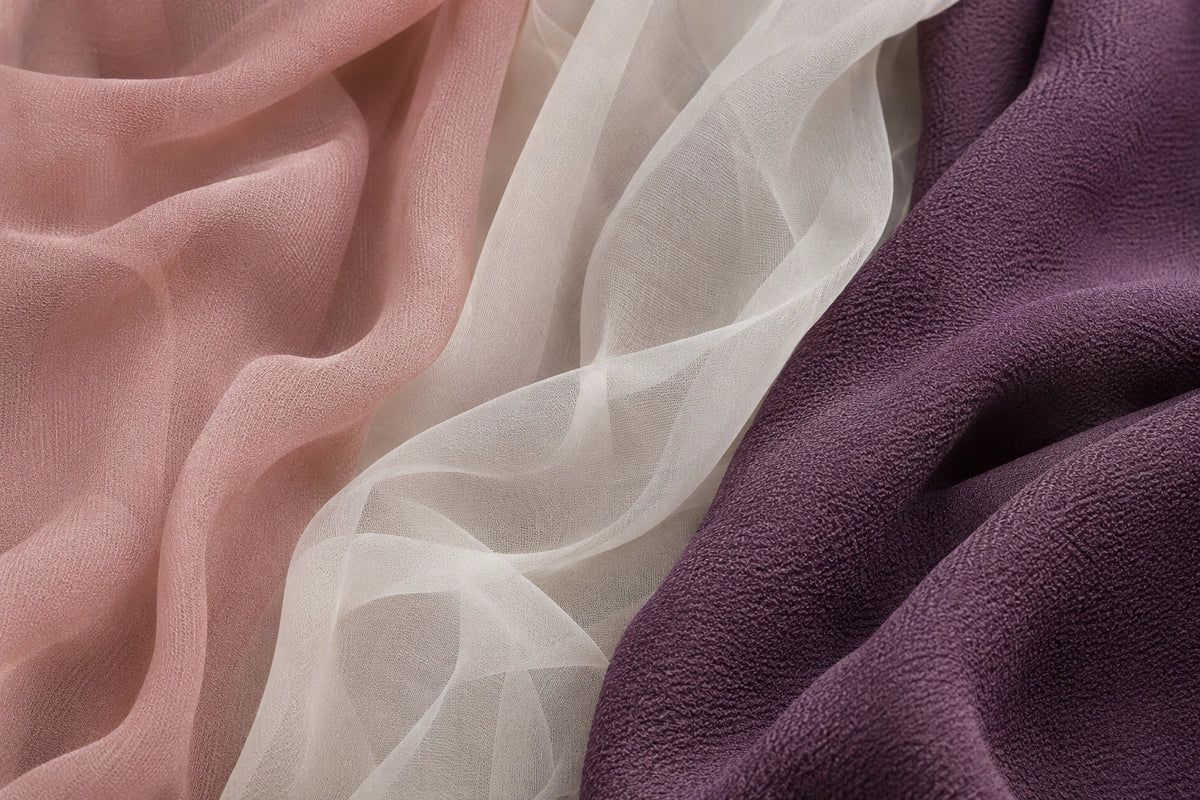
On a fabric shop's shelves, georgette, chiffon, and crepe can look remarkably alike. But turn them into the same dress, and the difference becomes unmistakable. Chiffon floats with every step, georgette falls in soft, textured folds, while crepe can create cleaner, more defined lines depending on its weight and construction.
The differences go beyond appearance. How a fabric feels against your skin, catches the light, holds pleats, or reveals what lies beneath can change the entire wearing experience.
This georgette vs chiffon vs crepe comparison explores those differences through real garment applications, helping you choose the right fabric for dresses, sarees, dupattas, and gowns before the first cut is made.
Georgette vs Chiffon vs Crepe: What's the Difference at a Glance?
The difference between georgette, chiffon, and crepe becomes clearer when you look beyond the fabric's appearance. Chiffon creates an airy, almost weightless effect; georgette offers fluid movement with a slightly grainy texture; and crepe can produce anything from a soft drape to a more defined silhouette. Each responds differently to movement, light, and the shape of the garment.
|
Feature |
Georgette |
Chiffon |
Crepe |
|
Surface feel |
Grainy, slightly crinkled |
Fine, lightly textured |
Smooth to pronounced pebbling |
|
Movement |
Fluid with some body |
Airy, floating |
Soft to controlled fall |
|
Transparency |
Often sheer or semi-sheer |
Usually sheer |
Varies by type and weight |
|
Garment appearance |
Soft, flowing silhouette |
Light, layered silhouette |
Sleek or more defined silhouette |
|
Typical applications |
Dresses, sarees, kurtis |
Gowns, overlays, dupattas |
Dresses, co-ords, trousers |
Why the Fabric Name Doesn't Tell the Whole Story
These characteristics are useful starting points, not fixed rules. Crepe covers a broad family of fabrics, and georgette itself has a crepe-like construction. Fibre composition, weave, GSM (fabric weight) and finishing influence how each material falls, feels and reveals light.
For example, georgette fabric for dresses can support soft gathers, while chiffon for gowns works beautifully as a floating overlay. Crepe dress fabric may create cleaner lines, but its suitability depends on the particular variety.
The deciding factor is the silhouette you want the finished garment to create.
How Do Georgette, Chiffon and Crepe Move When You Wear Them?
A dress reveals its fabric's character the moment you start walking. Some materials follow the body's movement, others float away from it, while some retain a cleaner silhouette. In the georgette vs chiffon vs crepe comparison, these differences become most apparent around the waist, sleeves, and hemline.
Georgette: Fluid Movement with a Little Body
Georgette moves with a gentle, rolling motion rather than floating freely. Its textured surface and twisted yarn construction give it a little resistance, allowing gathers to form soft, distinct folds.
In flared dresses, the hem swings naturally with each step, while gathered sleeves retain a relaxed, rounded shape. This makes georgette fabric for dresses particularly appealing when you want movement without an excessively delicate appearance.
Chiffon: Light Movement That Catches the Air
Chiffon responds to the slightest movement. A walking stride, a turn or a gentle breeze can send its lightweight layers drifting beyond the body's outline.
This quality makes chiffon for gowns especially effective in layered skirts, flowing sleeves and delicate overlays. Rather than creating a sharply defined shape, chiffon produces an airy, romantic silhouette that changes with every movement.
Crepe: A More Controlled Fall, Depending on Weight
Crepe generally moves closer to the body, particularly in medium-weight varieties. Instead of billowing outward, the fabric tends to fall in longer, cleaner lines.
This makes crepe dress fabric ideal for minimalist dresses, tailored A-line silhouettes and softly fitted designs. Lighter crepes can still flow beautifully, while heavier varieties provide greater shape and stability.
The distinction is simple: georgette sways, chiffon floats, and crepe follows the cut of the garment.
How Does Each Fabric Feel Against Your Skin?
A fabric that feels beautiful between your fingers may behave differently after hours of wear. In the georgette vs chiffon vs crepe comparison, comfort often comes down to the subtle textures you notice around the neckline, sleeves, and waist.
Georgette: The Subtle Grain You Can Feel
Georgette has a slightly dry, pebbled surface created by tightly twisted yarns. You can often feel this fine grain when the fabric brushes against bare skin.
Silk georgette generally feels supple; viscose versions can offer a softer touch, and polyester georgette may feel comparatively crisp depending on its finish. When choosing georgette fabric for dresses, consider whether that texture will sit comfortably against your arms and shoulders.
Chiffon: Fine, Lightweight and Delicate
Chiffon feels remarkably light, although its surface isn't necessarily completely smooth. A faint grain may be noticeable where sleeves brush the arms or necklines rest against the collarbone.
Silk chiffon often feels softer than certain synthetic varieties. For chiffon gowns, a smooth lining can improve skin comfort while leaving the outer layers free to float.
Crepe: From Soft and Silky to Distinctly Textured
Crepe offers the widest variation in touch. Silk crepe can feel supple and silky, polyester crepe ranges from smooth to slightly dry, and heavier varieties may have a more pronounced texture.
When selecting crepe dress fabric, remember that lining determines what directly touches your skin.
Comfort isn't simply about fabric type. Fibre composition, construction, weight, and lining also influence breathability and how an outfit feels throughout the day.
Which Fabric Is More Transparent, and When Do You Need Lining?
A fabric can look perfectly opaque on a cutting table and turn noticeably sheer near a window. In the georgette vs chiffon vs crepe comparison, transparency depends on fabric construction, colour, weight, and the light passing through it.
Why Chiffon Often Needs a Lining or Multiple Layers
Chiffon's fine, lightweight construction allows light to pass through readily. For chiffon gowns and dresses, an opaque lining typically provides coverage while the outer layers retain their floating movement. Bridal overlays deliberately use this transparency to reveal embroidery, lace or contrasting layers beneath.
When Georgette Needs Lining
Georgette fabric for dresses often appears more substantial than chiffon, yet pale colours and lightweight weaves can reveal undergarments or seams, particularly under strong backlighting. For dresses requiring full coverage, lining becomes important. A lightweight lining can provide opacity without significantly restricting georgette's natural movement.
Can Crepe Dresses Be Worn Without Lining?
Medium- to heavyweight crepes may provide sufficient coverage without lining, while lightweight varieties can remain semi-sheer.
Crepe dress fabric isn't automatically opaque simply because it feels thicker or falls more heavily.
Try this simple transparency test: Hold each fabric against a contrasting background in daylight. Compare a single layer with two overlapping layers, then check it against a bright window. The deciding factor isn't the fabric's name, but how much it reveals under actual wearing conditions.
Which Fabric Works Best for Dresses, Sarees, Dupattas and Gowns?
The right fabric should complement a garment's cut, not compete with it. A flowing maxi dress needs different movement from a tailored co-ord, while a saree must balance graceful draping with manageable pleats.
Georgette Fabric for Dresses: When Flow and Shape Both Matter
Georgette works beautifully for wrap dresses, printed midis, flared maxis, and gathered sleeves. Its textured surface encourages soft folds without excessive billowing. Choose lighter georgette for delicate gathers and relaxed silhouettes. Slightly heavier varieties offer more body for fuller skirts and structured gathers.
Explore georgette fabric for dresses.
Chiffon for Gowns: When Delicate Movement Takes Priority
Chiffon excels in floating overlays, pleated evening gowns, gathered skirts, and sheer sleeves. Its lightweight construction creates movement without adding substantial bulk. However, the lining or underskirt largely determines the gown's shape. A fuller underskirt creates volume, while a narrow lining keeps the silhouette closer to the body.
Explore chiffon fabric for gowns.
Crepe Dress Fabric: For Cleaner Silhouettes
Crepe suits shift dresses, contemporary maxis and tailored co-ord sets where clean lines matter. Lightweight crepe creates softer movement, while heavier varieties offer greater substance. Stretch crepes can accommodate fitted designs, provided their recovery and construction suit the pattern.
Explore crepe dress fabric.
Georgette vs Chiffon vs Crepe for Sarees and Dupattas
-
Georgette: Soft, flowing pallus and manageable pleats, depending on fabric weight.
-
Chiffon: Airy dupattas and delicate pallus, although transparency and heavy borders require consideration.
-
Crepe: Neater folds and a more substantial fall in suitable varieties.
For embroidered borders, consider whether the fabric can support the embellishment without pulling or distorting.
Choose according to the finished garment's movement, coverage, and construction - not appearance alone.
Which Fabric Is Easier to Wear and Manage Throughout the Day?
A fabric's real test comes after hours of sitting, walking, and moving between different environments. Beyond appearance, comfort depends on how well the garment retains its shape and handles everyday movement.
Sitting, Walking and Travelling
Georgette's textured surface helps disguise minor creases, while chiffon moves freely around the legs but can catch on accessories. Crepe's wrinkle resistance varies considerably; some polyester varieties recover well after sitting, while others develop visible folds. For travel, consider whether the garment needs frequent adjustment, particularly around the hemline and waist.
Wearing These Fabrics in Indian Weather
During humid summers or outdoor celebrations, fibre composition matters as much as fabric weight. Silk and viscose varieties may handle moisture differently from polyester, while tightly constructed synthetic fabrics can feel less comfortable despite being lightweight. Chiffon's airy appearance doesn't automatically guarantee breathability, especially when paired with a substantial lining. For air-conditioned events, consider how much coverage the garment provides.
Snagging, Care and Repeated Wear
Chiffon and lightweight georgette can snag on jewellery, embellished bags or rough surfaces. Check seams and avoid pulling loose threads. Crepe's maintenance requirements depend on its fibre and finish. Always follow the fabric's care label for washing and pressing. Delicate silk varieties may require specialist cleaning, while some synthetics tolerate gentle washing. The easiest fabric to wear is one that suits your routine - not merely the one that feels lightest.
What Should You Check Before Buying Georgette, Chiffon or Crepe Online?
A beautiful fabric photograph tells you very little about how the material will behave once stitched. Before buying, look beyond colour and print to understand whether the fabric can deliver your intended silhouette.
Five Details That Matter Before You Buy
-
Fibre composition: Silk, viscose and polyester versions differ in softness, moisture handling and maintenance. The same fabric name doesn't guarantee the same wearing experience.
-
GSM and fabric weight: Lightweight fabrics favour airy layers, while heavier varieties may offer greater coverage and body. However, GSM alone cannot predict drape.
-
Fabric width: Check the usable width before calculating metres, particularly for flared dresses, layered gowns and wide dupattas.
-
Opacity: Pale shades often reveal more than darker ones. Busy prints can conceal what's underneath visually without making the fabric genuinely opaque.
-
Stretch and finish: Check surface texture, sheen, and elasticity. Fitted garments require crepe dress fabric with appropriate stretch, recovery, and weight.
Consider Stitching Requirements Before Checkout
Chiffon for gowns can slip during cutting and stitching, making careful handling and fine seam finishes essential. Lightweight georgette fabric for dresses also benefits from appropriate seam finishing and lining where needed.
Once you've chosen your fabric and garment style, use Tessuti's fabric requirement calculator to estimate the required metres.
A successful fabric purchase begins with understanding how the material will behave—not simply how it looks on screen.
Georgette, Chiffon or Crepe - Which One Should You Choose?
The best fabric isn't necessarily the lightest, softest, or most luxurious. It's the one that makes your garment look and feel exactly as intended. In the georgette vs chiffon vs crepe comparison, each has its strengths. Choose georgette for textured fluidity and graceful everyday silhouettes, chiffon for airy layers and occasionwear, or a suitable crepe for anything from relaxed draping to clean, tailored lines. Before deciding, consider three things: your garment's silhouette, the coverage you need, and how you want the fabric to feel throughout the day. Explore Tessuti's collections of georgette fabric for dresses, chiffon for gowns, and crepe dress fabric to find the right material for your next creation.
Frequently Asked Questions About Georgette, Chiffon and Crepe
1. What is the main difference between georgette, chiffon and crepe fabric?
The main difference between georgette, chiffon and crepe lies in their texture, movement and transparency. Georgette has a slightly grainy surface and fluid drape, chiffon is generally lighter and sheerer, while crepe ranges from softly flowing to more structured varieties. When comparing georgette vs chiffon vs crepe, consider the fabric's fibre content, weight and intended garment rather than its appearance alone.
2. Which is better for dresses, georgette or crepe?
Georgette is generally better for dresses that need flowing movement, soft gathers and flared silhouettes. Crepe works well for shift dresses, tailored styles and garments requiring cleaner lines. Georgette fabric for dresses is particularly suitable for wrap and maxi designs, while the right crepe dress fabric can provide a more controlled fall. The choice depends on the desired silhouette and fabric weight.
3. Is chiffon or georgette better for evening gowns?
Chiffon is often preferred for evening gowns with floating layers, sheer sleeves and delicate overlays. Georgette provides slightly more body, making it suitable for gowns with gathered skirts, flowing panels and a fuller drape. When choosing chiffon for gowns, consider the lining and underskirt because these determine coverage and strongly influence the finished silhouette.
4. Which fabric is best for sarees: georgette, chiffon or crepe?
Georgette is a versatile choice for sarees requiring flowing pallus and manageable pleats. Chiffon creates a lighter, more delicate drape but can be slippery and transparent. Crepe, depending on its weight, offers a smoother or more defined fall. For heavily embroidered sarees, choose a fabric that can support the border and embellishments without stretching or distorting.
5. Which is more transparent: georgette, chiffon or crepe?
Chiffon is generally the most transparent of the three, followed by many lightweight georgette varieties. Crepe can provide greater coverage, although lightweight crepes may also be sheer. Transparency depends on weave density, GSM, colour and finish. For dresses and gowns requiring full coverage, test the actual material against light before deciding whether to add lining.
6. Which is more comfortable in Indian summers: georgette, chiffon or crepe?
The most comfortable fabric for Indian summers depends on its fibre composition, construction, garment fit and lining. Lightweight chiffon may feel airy, but polyester chiffon is not necessarily more breathable than silk or viscose georgette. Certain lightweight crepes can also be comfortable. For hot, humid conditions, consider moisture handling and airflow rather than selecting fabric based on weight alone.
7. Is crepe fabric suitable for fitted dresses and formal wear?
Yes, crepe dress fabric can be suitable for fitted dresses, formal gowns and tailored co-ord sets when the correct variety is selected. Stretch crepe offers flexibility for body-skimming designs, while medium-weight woven crepe can produce cleaner, more structured silhouettes. Check the material's stretch, recovery and opacity before selecting it for a closely fitted garment.
8. Is georgette easier to stitch than chiffon?
Georgette is often easier to handle than chiffon because its slightly textured surface provides more grip during cutting and stitching. Chiffon's fine, slippery construction can shift under the sewing machine and may require careful stabilisation. Both fabrics benefit from fine needles, suitable thread and neat seam finishes. Stitching difficulty also varies with fibre composition and fabric weight.
9. Is georgette a type of crepe fabric?
Yes. Georgette is a lightweight fabric with a distinctive crepe-like construction, typically created using highly twisted yarns that produce its fine, pebbled texture. However, crepe is a broader fabric category that includes materials with different weights, finishes and draping properties. This explains why georgette and other crepe fabrics can feel similar yet behave differently when stitched into garments.
Comments