
Fabric Prints: Why Beautiful Designs Go Wrong After Stitching
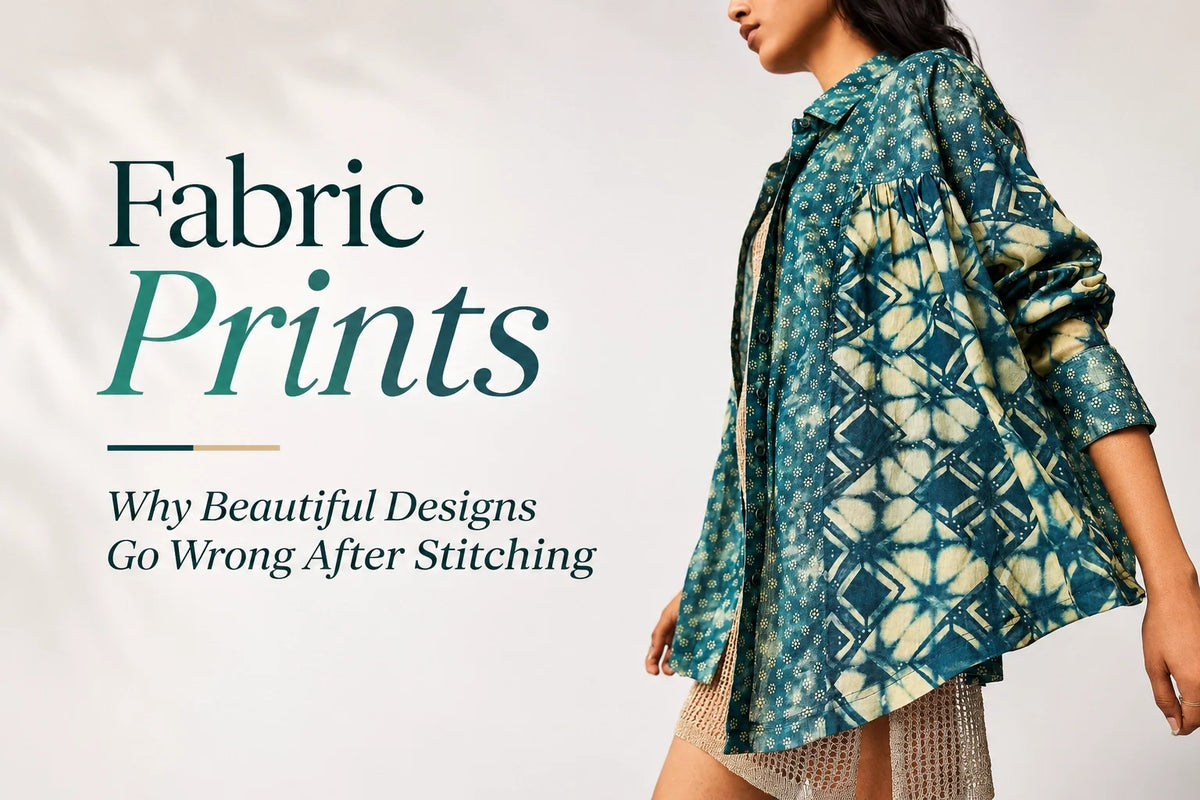
You found the perfect floral print. Beautiful colours, an expensive-looking design, everything you'd imagined for your outfit. Then came the stitched version. A flower sliced across the button placket. The border swallowed by a seam. Two sleeves that barely look related. The problem isn't always poor tailoring. Fabric prints behave differently once cut, folded and shaped around the body. Print scale, motif placement and cutting layout can make or break the design. The secret? Choose the print with the finished garment in mind, not just the fabric on display.
Why Do Fabric Prints Look Different After Stitching?
Fabric prints look different after stitching because cutting, seams, darts and pleats interrupt the original design. A print that looks beautifully balanced across an open fabric may appear uneven once divided into smaller garment pieces.
The Difference Between Choosing a Beautiful Print and Making It Work
Imagine a striking floral printed fabric spread across 150 cm of width. Now picture that same design squeezed into a narrow blouse front, interrupted by a button placket or disappearing into a sleeve seam.
That's where fabric print placement matters. A skilled cutting layout considers motif size, direction and position before the scissors touch the cloth. Your finished outfit doesn't display the entire print. It displays what survives the cutting table.
Four Fabric Print Mistakes That Can Ruin an Otherwise Beautiful Outfit
Even stunning fabric prints can disappoint when the cutting layout ignores how motifs will appear on the finished garment.
|
What looked beautiful |
What happened after stitching |
Likely reason |
|
Oversized florals |
Flowers look awkwardly cropped |
Motif scale overlooked |
|
Decorative borders |
Border disappears or sits unevenly |
Hem placement miscalculated |
|
Geometric repeats |
Patterns break at seams |
Print matching overlooked |
|
Directional designs |
Motifs face different directions |
Cutting orientation ignored |
Mistake 1 - The Most Beautiful Part Gets Cut Away
A statement flower or illustrated motif can disappear into a dart or button placket. Identify the focal design before cutting your floral printed fabric.
Mistake 2 - The Border Ends Up in the Wrong Place
With border print fabric, garment length, cutting direction and hem allowances determine whether the decorative edge sits exactly where intended.
Mistake 3 - The Left and Right Sides Look Unrelated
Poor fabric print placement can leave centre-front panels visibly mismatched. Align prominent motifs and repeats before cutting.
Mistake 4 - The Print Is Upside Down
One-way prints demand consistent cutting orientation. Reversing pattern pieces to save fabric can leave flowers, illustrations or other directional motifs facing the wrong way.
Are Large Fabric Prints Always Better Than Small Prints?
Neither large nor small fabric prints are universally better. The right choice depends on garment proportions, motif spacing and how the design will appear after cutting.
Why Does the Size of the Print Matter?
An oversized floral can look spectacular across a long skirt but lose its impact on a fitted blouse, where seams interrupt the design. Large prints aren't unsuitable for smaller garments; they simply demand more thoughtful fabric print placement.
When Do Small Fabric Prints Work Better?
Small florals and closely repeated motifs are often easier to distribute across sleeves, collars and narrow panels. Dense, irregular prints can disguise minor seam interruptions, while widely spaced motifs make placement differences more noticeable.
The Paper-Window Test
Cut a paper opening roughly the size of your intended garment panel. Move it across the fabric to see which motifs remain visible and which get cropped.
Before choosing, compare Floral Printed Fabrics and Small Print Fabrics at Tessuti.
All-Over, Panel or Border Fabric Prints: Which Should You Choose?
Not all fabric prints offer the same freedom at the cutting table. Some allow you to position garment pieces almost anywhere; others demand a carefully planned layout to preserve the design.
|
Type of Fabric Print |
How the Design Appears |
What to Check Before Buying |
|
All-over prints |
Motifs repeat across the fabric |
Scale, direction and seam matching |
|
Panel prints |
A design occupies a defined area |
Panel dimensions and focal placement |
|
Border prints |
Decorative motifs run along fabric edges |
Border width, hem position and cutting direction |
All-Over Fabric Prints - More Flexible Than You Think?
Small, non-directional repeats usually offer greater cutting flexibility. They're easier to distribute across sleeves, bodices and smaller panels. However, large geometric patterns or directional florals still demand careful alignment. A noticeable repeat interrupted at the centre-front seam can make even beautifully stitched garments look unbalanced.
Panel Print Fabric - When the Design Needs a Specific Position
A panel print fabric places the visual emphasis exactly where you want it: a statement motif at the neckline, an illustrated design across the front or decorative detailing near the hem.
But panel dimensions must accommodate the actual garment pattern, including seam allowances. Darts can distort a focal motif, while gathers and pleats may conceal parts of it. Explore Tessuti's Panel Print Fabrics with your garment measurements in mind.
Border Print Fabric - When the Edge Becomes the Highlight
A border print fabric can beautifully frame a kurta hem, sleeve cuff or skirt edge.
The challenge? Border width, fabric grain and cutting direction must work together. A straight border may sit neatly along a straight hem but appear uneven around a curved one.
Browse Tessuti's Border Print Fabrics and plan your cutting layout before deciding on the final garment length. The takeaway: Choose your print arrangement according to where you want the design to appear - not simply how attractive it looks on the fabric roll.
Why Do Some Fabric Prints End Up Facing the Wrong Direction?
Some fabric prints have a clear top and bottom. Ignore that orientation during cutting, and the finished garment may look mismatched despite accurate stitching.
What Are Directional Fabric Prints?
Directional prints feature motifs such as upward-growing flowers, birds or illustrated objects that face a particular way. Unlike non-directional repeats, they look noticeably different when rotated.
Why Does Cutting Direction Matter?
Imagine two sleeves cut from the same floral printed fabric - one with flowers growing upwards, the other upside down. Correct fabric print placement requires consistent motif orientation while respecting the fabric's grainline. This can limit fabric-saving layouts and increase metre requirements.
What About Stripes, Checks and Diagonal Designs?
Stripes, checks and diagonal patterns need careful alignment. Even slight changes in orientation can disrupt visual symmetry, particularly at centre-front seams, sleeves and side seams.
Border Fabric Prints: Why the Hem Can Make or Break the Design
A decorative border can transform a simple kurta. But if the cutting layout ignores the hem, the most beautiful part of the design may disappear into the stitching.
Why Doesn't Every Border Print Work on a Flared Outfit?
Straight border print fabric suits straight-cut kurtas more naturally than circular skirts. A-line silhouettes require careful planning, while multiple panels may interrupt the border's continuity.
Where Should a Decorative Border Actually Sit?
Decide whether the border belongs at the hem, sleeve cuffs or another design feature before cutting. Matching sleeves should maintain consistent border placement and visible width.
What If the Border Runs Along the Fabric's Selvedge?
A selvedge-side border limits cutting flexibility. Rotating pattern pieces to reposition it may disturb the grainline, affecting how the garment hangs.
Why Must Hem Allowances Be Planned First?
Imagine a kurta whose decorative border is partly swallowed by a deep folded hem. Calculate the hem allowance before positioning the pattern. A narrower suitable finish or adjusted cutting layout may preserve the complete design. With decorative fabric prints, plan the visible finished edge first, then work backwards to the cutting line.
Why Do Fabric Prints Stop Matching at Seams?
Sometimes an outfit looks slightly wrong, but you can't explain why. Then you notice it: a stripe, flower or geometric motif stops abruptly at a seam.
This usually happens when fabric print placement isn't considered during cutting.
Which Seams Need the Most Attention?
Prioritise highly visible joins:
-
Centre-front openings and button plackets.
-
Side seams, yokes and patch pockets.
-
Sleeves join and connect decorative borders.
What Is a Print Repeat?
A print repeat is the distance between corresponding points in a repeating design, measured horizontally or vertically. Larger repeats often require additional fabric to align motifs across garment pieces.
Do Floral Fabric Prints Need Perfect Matching?
Not always. Small, irregular florals disguise minor interruptions, while oversized flowers and geometric fabric prints expose mismatches more readily. The intended design also matters.
The Stitching-Line Rule
Match motifs where the seams will actually be stitched, not merely at the raw fabric edges. Seam allowances disappear inside the garment, so matching at the cutting edge can still produce a visible mismatch after sewing.
One Fabric Print, Four Outfits: Why the Garment Shape Changes Everything
The same floral printed fabric can look elegant on a straight kurta, dramatic on an Anarkali and completely different on a fitted blouse. The difference lies in how each garment distributes the design.
|
Garment |
Print Placement Priority |
Common Challenge |
|
Straight kurta |
Centre-front balance and hem placement |
Cropped motifs near the placket |
|
Flared kurta or Anarkali |
Distribution across multiple panels |
Interrupted prints and borders |
|
Fitted blouse |
Motif scale and bodice positioning |
Flowers distorted by darts |
|
Co-ord set |
Visual balance between top and bottom |
Competing focal points |
Why Can the Same Print Look Better on a Straight Kurta Than an Anarkali?
Straight-cut kurtas provide relatively uninterrupted panels. Anarkalis introduce flare, gathers and multiple seams, which redistribute motifs and may break decorative borders.
Can Large Fabric Prints Work on Small Garments?
Absolutely. Thoughtful fabric print placement can preserve a statement flower on a blouse front or sleeve. The trick is choosing which part of the design deserves attention.
When Should You Break the Rules?
Asymmetrical motifs and off-centre placement can look striking when intentional. The difference between creative design and a cutting mistake? One looks deliberate; the other looks accidental.
Buying Printed Fabric? Why the Usual Metre Calculation May Not Be Enough
Having enough fabric to stitch an outfit doesn't always mean having enough to position the print beautifully. That's a costly distinction many buyers discover after cutting.
Why Can Fabric Prints Require Extra Material?
Large repeats, one-way motifs and symmetrical fabric print placement can increase metre requirements. Matching patterns across seams or positioning decorative borders may also restrict how garment pieces are arranged.
What Should You Check Before Buying Panel Print Fabric?
Before ordering panel print fabric, confirm:
-
Panel length, width and fabric width.
-
Placement of the main motif.
-
Number of complete panels supplied.
-
Whether designs repeat continuously or appear in fixed sections.
-
Compatibility with your garment measurements.
Can a Fabric Calculator Predict Print Placement Requirements?
Standard estimates don't always account for motif matching, directional cutting or border print fabric placement.
Use Tessuti's Fabric Requirement Calculator for an initial estimate, then confirm the cutting layout and additional print-matching allowance with your tailor before purchasing.
The Five-Minute Fabric Prints Checklist Before Stitching
Beautiful fabric prints deserve more than a quick measurement and a pair of scissors. Before your tailor makes the first cut, run through this checklist.
Five Things to Check Before the First Cut
-
Scale: Will the motif fit proportionately on the blouse, sleeve or kurta panel?
-
Placement: Is the focal design positioned where you want it, especially with panel print fabric?
-
Direction: Are flowers, illustrations and other directional motifs facing correctly?
-
Seams: Will prominent patterns align across plackets, side seams and sleeve joins?
-
Quantity: Is there sufficient material for matching repeats, positioning borders and adjusting the cutting layout?
A tailor's tip: Lay the paper pattern pieces over the fabric before cutting. Photograph the proposed arrangement, including seam allowances, so you and your tailor can agree on the fabric print placement.
Five minutes of planning can prevent a permanent design disappointment.
Find Fabric Prints That Work With Your Outfit at Tessuti
The beauty of fabric prints lies in how they come alive after stitching. But the right print is only half the story. Garment proportions, motif scale and thoughtful fabric print placement determine whether your finished outfit looks as beautiful as you imagined.
Explore Tessuti's Border Print Fabrics, Panel Print Fabrics and Floral Printed Fabrics. Choose beyond the print. Picture the garment before the first cut.
Frequently Asked Questions About Fabric Prints, Placement and Stitching
1. What is fabric print placement, and why is it important in garment stitching?
Fabric print placement is the planned positioning of printed motifs on garment pieces before cutting. It determines where flowers, borders, stripes or illustrations appear on the finished outfit. Good placement protects focal designs from being awkwardly interrupted by seams, darts and button plackets. It also helps maintain visual balance between matching garment sections.
2. Which fabric prints are best for kurtis and fitted blouses?
Small, evenly distributed prints are often easier to position on fitted blouses, while straight-cut kurtis can accommodate both small repeats and larger statement motifs.
The distinction comes down to panel size. A blouse has darts and narrow pieces that interrupt oversized designs, whereas a kurta offers more uninterrupted fabric. Explore Tessuti's Small Print Fabrics for designs suited to smaller garment sections.
3. Can large floral printed fabric work for a small blouse or crop top?
Yes, large floral printed fabric can look striking on a small garment when the focal motif is positioned deliberately. The aim isn't necessarily to display the entire flower but to make the visible portion look intentional. Before cutting, place the blouse pattern over the fabric. Check where the bust dart, neckline and armhole will interrupt the design. Browse Floral Printed Fabrics at Tessuti to compare different motif arrangements.
4. What is the difference between all-over print and panel print fabric?
All-over prints repeat across the fabric surface, while panel print fabric features a design arranged within a defined area. All-over patterns generally offer more freedom when positioning garment pieces. Panel prints require the main motif to align with a specific garment section, such as a kurta front, dress panel or hem. Explore Tessuti's Panel Print Collection to understand how statement designs are arranged.
5. How do I know whether a panel print will fit my kurta design?
Measure the usable printed panel, then compare its width and length with your kurta pattern, including seam allowances. Also check whether the focal design will be interrupted by a neckline, placket, dart or side seam. For garments with multiple panels, confirm how many complete printed sections are available. A panel that looks large on the fabric roll may still be too narrow for your intended cutting layout.
6. Can border print fabric be used for A-line kurtas and Anarkalis?
Yes, but border print fabric needs additional planning for flared garments. A straight border doesn't automatically follow a curved or circular hem. Straight-cut kurtas are usually simpler to plan. A-line kurtas and Anarkalis may require adjustments to panel layout, border alignment or hem construction. Explore Tessuti's Border Print Fabrics and check the border position before finalising your garment pattern.
7. Why does the decorative border disappear after stitching?
A decorative border can disappear when the cutting layout fails to account for hem allowances, seam allowances or garment length. For example, folding a deep hem can conceal part of a printed floral border. To avoid this, mark the final visible hemline and position the border accordingly. Depending on the fabric and garment, a narrower hem or separate facing may help preserve the design.
8. Why don't floral fabric prints match at the side seams?
Floral fabric prints may mismatch at side seams when adjoining garment pieces are cut without aligning their prominent motifs or print repeats. Small, irregular flowers can disguise minor interruptions. Larger, recognisable blooms tend to expose them. For accurate matching, compare the design at the stitching line, not just the raw cutting edge. Seam allowances change which parts of the print remain visible.
9. What is a fabric print repeat, and how do I measure it?
A fabric print repeat is the distance between corresponding points of the same design in a repeating pattern. Measure from one recognisable motif to its next identical position. Check both the horizontal and vertical directions because the repeat may differ. Large repeats can affect garment cutting, particularly when matching centre fronts, sleeves or visible side seams.
10. Why do printed sleeves sometimes look different from each other?
Printed sleeves can look mismatched because the motifs were cut in different directions or positioned differently on each sleeve. With one-way fabric prints, flowers, birds and illustrations should generally maintain a consistent orientation. For symmetrical designs, use corresponding motifs on both sleeves wherever practical. Lay both sleeve patterns side by side before cutting to check their visual relationship.
11. Are striped and checked fabric prints harder to stitch than floral prints?
Striped and checked prints often require more precise seam matching than small, irregular florals. Continuous lines make even slight alignment errors noticeable.
Checks may need matching in both horizontal and vertical directions. Stripes also require attention to orientation, especially around centre fronts and side seams. Compare Tessuti's Striped Fabrics and Checked Fabrics when planning a garment with visible pattern continuity.
12. How much extra printed fabric should I buy for pattern matching?
There is no universal extra percentage for every printed fabric. The additional quantity depends on print repeat size, garment measurements, fabric width, directional cutting and the number of seams requiring alignment.
Large florals, checks and one-way patterns can require considerably more layout flexibility than small, non-directional repeats. Use Tessuti's Fabric Requirement Calculator, which includes print-matching and wastage allowances, as an initial estimate. Confirm the final layout with your tailor.
13. Can darts, pleats and gathers distort fabric prints?
Yes. Darts remove or redistribute fabric, while pleats and gathers fold sections of a print out of sight.
An oversized flower placed across a bust dart may appear interrupted after stitching. Similarly, a detailed motif can become difficult to recognise when gathered into a skirt or waistline. Position important motifs in relatively uninterrupted areas whenever preserving the complete design matters.
14. Does digital printing give better fabric print placement than block printing?
Printing technique and garment print placement are separate considerations. Digital printing can reproduce intricate artwork, while block printing produces designs through repeated impressions of printing blocks.
Neither technique guarantees that a motif will sit correctly on a finished garment. Cutting layout, design scale and pattern construction still determine the visible placement. Read Tessuti's Guide to How Printed Fabrics Are Made to understand the differences between printing methods.
15. What should I check before buying printed fabric online for stitching?
Before buying fabric prints online, check five things: motif scale, print direction, fabric width, fibre composition and the amount needed for cutting.
Look for close-up images that show the repeat and, for panel or border prints, confirm the location and dimensions of the decorative design.
Request a swatch when available for important projects. You can also use Tessuti's Fabric Finder to assess which fabric types suit your intended garment. Don't buy printed fabric based only on how beautiful the full design looks. Choose it according to how that design will appear once the garment is cut, shaped and stitched.
Comments