
Fabric for Co-ord Sets: Is making the Fabric choice as effortless as it seems?
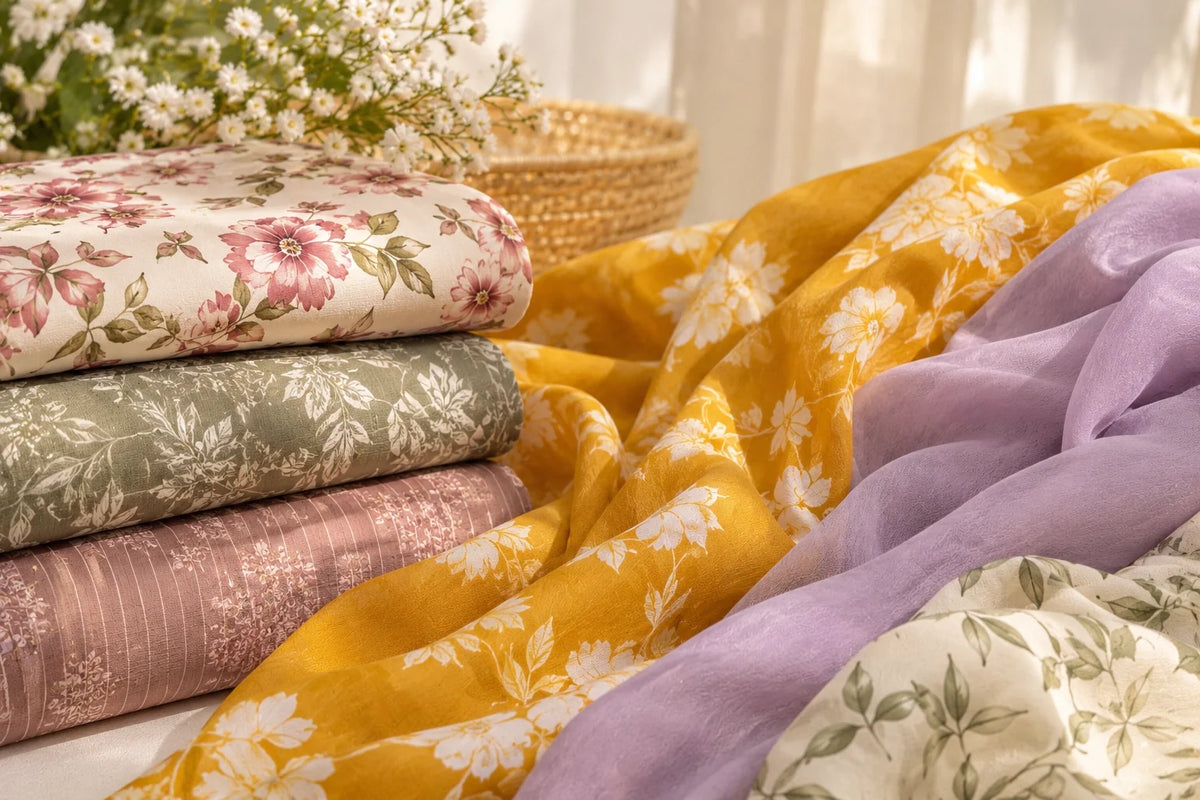
A matching print can make two pieces look perfect on a cutting table - and disappointing once worn. Fabric that drapes beautifully as a relaxed kurta may cling across trousers, turn sheer in daylight, or lose its shape at the seams.
Choosing fabric for co-ord sets means thinking beyond colour: both garments need the right weight, movement, opacity and comfort. Whether you're sewing one outfit or planning a boutique collection, this guide explains how to match fabrics to silhouettes, work with prints and make better buying decisions.
What Makes a Fabric Suitable for Co-ord Sets?
The right fabric for co-ord sets must balance drape, weight, opacity and comfort across both garments. A top may need softness and fluid movement, while trousers require enough coverage and structure to maintain their shape. The fabric should support both silhouettes without compromising fit, appearance or everyday wearability.
Why Matching Colours Doesn't Guarantee a Matching Outfit
Matching colours or prints create visual harmony, but a successful co-ord requires three types of compatibility:
-
Visual coordination: Colours, print scale and textures should complement both pieces.
-
Physical compatibility: Fabric weight, drape and stretch must suit each garment's silhouette.
-
Practical compatibility: Shrinkage, colourfastness and care requirements should remain consistent after washing.
For example, a lightweight fabric may drape beautifully as a relaxed tunic but cling around the hips or appear transparent when used for straight trousers.
The goal is one cohesive outfit, not simply two matching garments.
Start With the Silhouette, Not the Fabric Print
A beautiful print cannot compensate for fabric that doesn't suit the garment's shape. Before choosing fabric for co-ord sets, consider how each piece should fall, move, and hold its structure when worn. Use Tessuti's fabric finder to shortlist materials according to your garment and preferred feel.
Relaxed Co-ord Sets Need Movement
Oversized shirts, loose kurtas and palazzo trousers need fabrics with a soft, fluid drape. Lightweight cotton, viscose and suitable crepe fabrics can create this relaxed appearance. However, softness shouldn't mean excessive cling. Check whether the fabric falls freely around the hips and provides adequate coverage for trousers.
Tailored Co-ord Sets Need Enough Structure
Straight trousers, boxy shirts and defined waistbands benefit from fabrics with more body, such as cotton poplin, twill or structured crepe. The fabric should hold clean seams, pleats and sharp edges without becoming uncomfortable. Materials that are too limp can make tailored silhouettes appear shapeless.
Everyday Ethnic Co-ords Need a Balance of Both
Kurta-and-trouser combinations require comfortable movement alongside neat necklines, plackets and hems. Medium-weight cotton co-ord fabric can provide this balance, provided it offers sufficient opacity and maintains its shape after washing.
Choose fabric according to the silhouette first. A material that flatters a flowing kurta may not provide enough structure for straight trousers.
Which Fabrics Work Best for Three Popular Co-ord Silhouettes?
Choosing the right fabric for co-ord sets starts with understanding how the outfit should fit and move. A relaxed palazzo set needs a different fabric structure from tailored trousers, even when both feature the same print. Here are three practical fabric combinations to consider.
1. Relaxed Kurta and Palazzo Sets - Softness Without Cling
Relaxed kurtas and wide-leg palazzos look best in fabrics that fall naturally without creating unnecessary volume. Softly finished cotton, viscose, and fluid crepe offer suitable options, depending on their weight and construction. The kurta should move freely, while the palazzo needs enough opacity and softness to remain comfortable around the waist and hips. For printed fabric for co-ord sets, small florals, traditional buti motifs, and delicate all-over prints can create visual continuity without overwhelming the silhouette.
What to check: Hold the fabric against light and assess how it falls when gathered. Avoid overly stiff cotton or sheer materials unless the design includes suitable lining.
2. Short Kurti and Straight-Pant Sets — Easy Shape, Everyday Comfort
This silhouette requires more structure than a flowing palazzo set. Cotton cambric, poplin, and suitable cotton blends can support a neat neckline, defined placket, and straight trouser shape while remaining comfortable for extended wear. When selecting cotton co-ord fabric, consider how the material behaves at the knees and seat, not just across the upper body. Smaller repeating prints work particularly well because the design continues naturally from a shorter kurti to longer trousers without awkward motif interruptions.
What to check: Choose fabric with sufficient body and opacity. Very lightweight cotton may feel pleasant but require lining or a different construction for trousers.
Explore Tessuti's cotton fabrics to compare suitable options.
3. Structured Shirt and Tailored-Trouser Sets — A Sharper Finish
A boxy shirt paired with tailored trousers needs fabric that maintains its intended shape. Cotton twill, structured crepe and medium-weight woven blends are useful options. Look for enough body to support collars, waistbands, pleats and clean trouser lines without excessive bulk at seams. Solids, subtle textures and controlled geometric prints complement this sharper silhouette.
What to check: Fold the fabric into a pleat and observe whether it holds a clean line. Avoid highly fluid materials that collapse around the waistband or distort the intended shape.
The key: The best fabric should serve both garments, not just make them match.
Cotton, Crepe or Twill: How Do You Choose the Right Co-ord Set Fabric?
The best fabric for co-ord sets depends on how you want both garments to look, feel, and move. Cotton, crepe and twill offer different possibilities, but their construction matters as much as their names.
Cotton Co-ord Fabric for Everyday Ethnic Wear
Cotton offers breathable comfort and a familiar, soft hand-feel, making it suitable for everyday kurtas and matching bottoms. However, cotton fabrics differ considerably:
-
Cambric: Smooth and finely woven, suitable for comfortable everyday sets.
-
Voile: Lightweight and airy, often better for loose tops or lined garments.
-
Poplin: Crisp and closely woven, ideal for neater silhouettes.
-
Cotton twill: More structured, depending on its weight and finish.
Very lightweight cotton co-ord fabric may drape beautifully as a kurta but lack sufficient opacity for unlined trousers.
Crepe for Fluidity and a Softer Fall
Crepe's characteristic textured surface can come in silk, viscose, polyester, and blended constructions. Each behaves differently in terms of drape, stretch, breathability, and opacity. Fluid crepes suit relaxed kurtas and wide-leg trousers, while more substantial varieties can support defined shapes. Explore Tessuti's crepe fabric collection to compare textures and prints.
Twill for Definition and Structured Separates
Twill's diagonal weave creates a distinctive surface and can provide the body needed for straight trousers, boxy shirts and defined waistbands. Compare options in Tessuti's twill fabric collection. Choose a suitable weight to maintain structure without creating bulky seams or excessive stiffness.
Can You Mix Two Different Fabrics in One Co-ord Set?
Absolutely. Pairing a lightweight printed top with slightly heavier solid trousers can improve comfort and coverage. Ensure both fabrics have compatible colours, surface finishes, shrinkage behaviour and care requirements so the outfit remains coordinated after washing.
Fabric Weight, Drape and Opacity: Three Checks Before You Buy
A fabric swatch may look promising on a counter but behave differently when stitched into a kurta and trousers. Before buying fabric for co-ord sets, evaluate these three properties.
Why GSM Alone Cannot Tell You How a Fabric Will Fall
GSM (grams per square metre) measures fabric weight, not drape. Check Tessuti's fabric GSM chart for typical weight ranges, then evaluate drape separately. Two fabrics with identical GSM can hang differently because fibre composition, weave, finishing and stretch influence their flexibility. Rather than searching for an ideal GSM, consider whether the fabric provides the movement or structure your silhouette requires.
Test Movement, Not Just Softness
Before purchasing, perform three simple checks:
-
Hang test: Let the fabric fall naturally to observe its drape.
-
Fold test: Gather the material to assess stiffness and bulk around seams or waistbands.
-
Movement test: Gently move the swatch to see whether it flows freely or maintains its shape.
A fabric that falls beautifully as a loose kurta may create excessive bulk around a trouser waistband.
Check Opacity Where It Matters Most
Light-coloured cotton co-ord fabric can appear opaque when folded but become noticeably sheer as a single layer. Hold the fabric against daylight and gently stretch it. Pay particular attention to the seat, thighs and knees, where movement and fit affect coverage. If the fabric suits the top but lacks trouser opacity, consider a denser matching material or suitable lining.
Printed Fabric for Co-ord Sets: How to Make Both Pieces Look Intentional
Choosing printed fabric for co-ord sets involves more than matching colours. Print scale, placement, and direction determine how well a pattern works across two different garment shapes.
Print Scale Changes Across Tops and Trousers
Small repeats and buti motifs suit shorter kurtis and straight trousers. Medium florals complement relaxed silhouettes, while oversized prints can look striking on wide-leg palazzos but overwhelm a cropped top. Consider how much of each motif remains visible after cutting and stitching.
Matching Prints vs Coordinating Prints
Three approaches work particularly well:
-
Matching prints: Use the same small floral or block print across a kurti and trousers for a cohesive look.
-
Print with solid: Pair a printed kurta with plain trousers in a colour drawn from the design. Use Tessuti's fabric colour finder to shortlist coordinating shades.
-
Coordinating prints: Combine medium florals with fine stripes or smaller motifs sharing a colour palette.
Plan Print Direction, Borders and Placement Before Cutting
Check motif direction, repeat length and fabric width before cutting. Large prints may break awkwardly across trouser seams, while directional patterns can appear upside down if pieces are incorrectly positioned. Border prints require deliberate placement around hems, sleeves or trouser edges. Allow extra fabric for pattern matching.
Why Fabric Lot Consistency Matters
Different dye or printing lots may show slight shade variations or registration differences. When purchasing co-ord set fabric wholesale, source sufficient matching yardage from the same lot and retain reference swatches for repeat orders.
Explore Tessuti's small-print fabrics for coordinated outfit ideas.
Comfort and Care: Will Both Pieces Still Match After Washing?
Two pieces may match perfectly when stitched but behave differently after repeated washing. Choosing fabric for co-ord sets means considering long-term comfort and care alongside appearance.
Consider Comfort Across the Whole Outfit
A fabric that feels comfortable as a loose kurta may cling around the hips or restrict movement when used for trousers. Check breathability, softness against the skin, and ease of movement. If lining is necessary for coverage, consider whether it adds unwanted warmth or bulk.
Shrinkage Can Affect the Top and Bottom Differently
Cotton and viscose fabrics may shrink differently depending on their weave, finishing and pre-treatment. Before cutting cotton co-ord fabric, pre-wash it where appropriate or test a representative swatch according to its care instructions. Uneven shrinkage can alter trouser length, sleeve fit and the outfit's overall proportions.
Colourfastness, Creasing and Daily Maintenance
For printed fabric for co-ord sets, check colourfastness to prevent bleeding or uneven fading. Consider whether both pieces require similar washing, drying and ironing conditions. Different creasing behaviours can also make a coordinated outfit look inconsistent. For washing and maintenance guidance across different fibres, read Tessuti's fabric care guide.
The real test: A well-chosen co-ord should retain its fit, colour harmony and appearance beyond the first wear.
How Much Fabric Do You Need for a Two-Piece Co-ord Set?
When buying fabric for co-ord sets, estimate the top and trousers separately. Even matching pieces rarely require equal fabric lengths.
Estimate the Top and Bottom Separately
Calculate requirements using garment measurements, size, and usable fabric width. Consider:
-
Top: Garment length, sleeve length, neckline details, and ease.
-
Bottom: Trouser length, width, flare, pleats and waistband.
-
Cutting layout: Seam allowances, print direction and pattern placement.
Wider fabric may reduce consumption, provided the pattern pieces fit efficiently.
Why Printed Co-ords May Need Extra Fabric
Printed fabric for co-ord sets may require additional length to align stripes, borders or repeating motifs across seams. Directional prints also restrict cutting arrangements. Allow for pattern matching, cutting waste, and shrinkage where applicable.
What Changes When You're Making Several Sizes?
For boutique collections, fabric consumption changes with garment size and silhouette. Larger sizes, wider palazzos, and additional design details affect cutting efficiency. Before placing a co-ord set fabric wholesale order, prepare cutting layouts for each size range rather than multiplying one sample's consumption.
Use Tessuti's Fabric Requirement Calculator for an initial estimate, then confirm quantities with your actual patterns.
Buying Co-ord Set Fabric Wholesale: What Should Boutiques Check First?
Buying co-ord set fabric wholesale requires more than comparing prices. Boutique owners must consider fabric consistency, cutting efficiency, and whether the same design can be reproduced across sizes and repeat orders.
Sample the Fabric Before Committing to a Collection
Before approving fabric for co-ord sets, request a swatch or sample length. Check:
-
Appearance: Actual colour, print clarity and opacity in daylight.
-
Performance: Drape, hand-feel, seam behaviour and comfort.
-
Care: Shrinkage, colourfastness and appearance after washing.
Ideally, stitch one complete sample to assess how both garments behave together.
Understand Width, Usable Yield and Cost Per Set
A lower price per metre doesn't always mean lower production costs. Fabric width, print repeats, cutting waste and size variations affect consumption.
Fabric cost per set = Actual metres consumed for both pieces × Fabric price per metre.
Calculate consumption from approved patterns, including cutting allowances, before comparing wholesale quotations.
Keep Matching Fabric Available for Repeat Orders
Before placing a bulk order, confirm:
-
Minimum order quantities and stock availability.
-
Consistency of shade, print and fabric construction.
-
Reordering lead times and substitution options.
Keep labelled reference swatches to compare future deliveries against approved samples.
Start With a Focused Three-Silhouette Collection
Test three designs: a relaxed kurta-palazzo, an everyday kurti-trouser, and a structured shirt-trouser set.
This helps identify which fabrics perform best before expanding print variations or production quantities.
Explore Tessuti's wholesale fabric options for boutiques to shortlist suitable materials and discuss bulk requirements.
Explore Co-ord Set Fabrics at Tessuti
The right co-ord starts with fabric that works for both pieces, not just a matching colour. Tessuti offers fabric for co-ord sets, including crepe, twill and other constructions suited to different silhouettes.
Explore the collection by comparing fabric weight, drape, texture, opacity and care requirements against your intended design. Whether you're planning flowing palazzos or structured trousers, these details matter more than print alone.
Shop Fabric for Co-ord Sets at Tessuti. For boutique collections, enquire about fabric samples, stock availability and co-ord set fabric wholesale requirements before finalising production quantities.
Frequently Asked Questions About Fabric for Co-ord Sets
1. Which Fabric Is Best for Co-ord Sets in Summer?
Lightweight cotton cambric, breathable cotton blends and suitable viscose fabrics are good options for summer co-ords. Choose according to the intended silhouette and ensure the trouser fabric provides sufficient opacity, even when the top uses a lighter material.
2. Is Cotton or Crepe Better for Co-ord Sets?
Cotton is often preferred for breathable everyday comfort, while crepe offers different draping and textural possibilities. Fluid crepe can suit palazzo sets, whereas more structured varieties work for tailored pieces. The better choice depends on fibre composition, fabric construction and garment design.
3. Can I Use the Same Fabric for the Top and Trousers?
Yes, provided the fabric offers suitable drape, opacity, comfort and structure for both garments. A material that works beautifully for a loose kurta may lack the coverage or shape required for fitted trousers. Always assess both patterns before purchasing.
4. Can I Use Printed Fabric for One Piece and Plain Fabric for the Other?
Yes. Pairing a printed kurta with solid-coloured trousers creates a coordinated outfit without repeating the pattern. Choose a solid shade from the print and ensure both materials have compatible weights, textures and care requirements.
5. What Should I Check Before Ordering Co-ord Set Fabric Wholesale?
Before ordering co-ord set fabric wholesale, confirm fabric composition, usable width, minimum order quantity, price, shade consistency and reorder availability. Request samples to evaluate drape, opacity and washing performance. Also check lead times and whether repeat orders can match the original fabric lot.
6. How Do I Know Whether a Fabric Is Too Thin for Co-ord Trousers?
Hold a single layer against daylight and check whether objects or outlines show through. Gently stretch and gather the material to assess coverage. Pay attention to the seat, thighs and knees, where movement and fabric tension can make lightweight trousers appear transparent.
7. Which Fabric Is Best for Kurta and Palazzo Co-ord Sets?
Softly finished cotton, suitable viscose fabrics and fluid crepe can work well for kurta-palazzo combinations. Look for a fabric that creates movement through the wide legs without excessive stiffness or cling. The bottom must also offer adequate coverage and comfort.
8. Is Cotton Cambric or Cotton Poplin Better for Co-ord Sets?
Cotton cambric generally offers a smooth, lightweight feel suitable for everyday kurtas and relaxed separates. Poplin typically has a crisper finish that supports defined collars, plackets and straight trousers. Compare actual weight and finish rather than relying on the fabric name alone.
9. What GSM Is Best for Co-ord Set Fabric?
There is no universal ideal GSM for fabric for co-ord sets. GSM measures weight, but fibre, weave and finishing also influence drape and opacity. Choose fabric according to the silhouette, then examine how it falls, gathers and behaves when worn.
10. How Many Metres of Fabric Are Needed for a Co-ord Set?
Fabric requirements depend on garment size, fabric width, sleeve length, trouser flare, and cutting layout. Estimate the top and bottom separately. Directional prints, matching borders, and larger pattern repeats may require additional fabric to maintain the intended design.
11. Should I Pre-Wash Cotton Fabric Before Stitching a Co-ord Set?
Pre-washing is advisable for many washable cotton fabrics because shrinkage can alter garment measurements. Follow the material's care instructions or test a representative swatch first. This is particularly important when the top and trousers use different cotton constructions.
12. Which Prints Work Best for Everyday Ethnic Co-ord Sets?
Small florals, buti motifs, block prints, and balanced geometric repeats work well for many everyday ethnic silhouettes. Smaller prints suit short kurtis and straight trousers, while larger motifs can complement flowing palazzos. Consider print scale and placement before cutting.
13. Can I Mix Two Different Fabric Weights in One Co-ord Set?
Yes. A lighter fabric for the top and a slightly more substantial material for the trousers can improve comfort and coverage. Choose complementary textures and colours, and confirm that their shrinkage and care requirements are compatible.
14. How Can I Choose Co-ord Set Fabric When Buying Online?
Check the listed fibre composition, fabric width, weight, finish and care instructions. Examine close-up photographs and look for information about drape and opacity. For printed fabric for co-ord sets, request a swatch when available, especially before ordering fabric for multiple garments.
Comments