
Brocade Fabric: Royal Weaves, Rich Textures & Timeless Grandeur
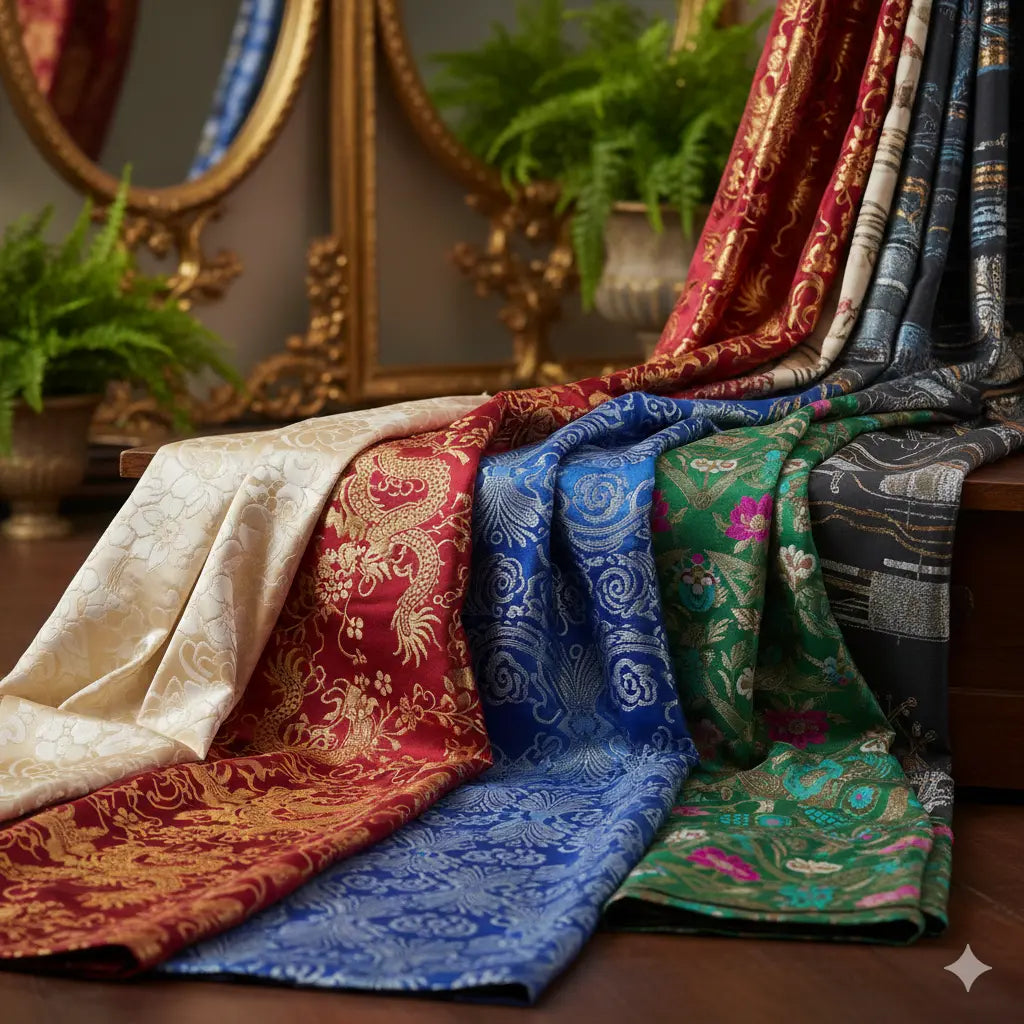
Brocade is a luxurious woven fabric known for its raised patterns, rich texture, and ornate designs. Traditionally associated with royalty and ceremonial attire, brocade fabric reflects elegance, heritage, and craftsmanship. Widely used in ethnic wear, bridal outfits, and luxury home décor, brocade continues to be a symbol of opulence.
What is Brocade Fabric?
Brocade is a decorative woven fabric in which intricate patterns are created directly on the loom using supplementary weft yarns. Unlike printed or embroidered fabrics, brocade designs are woven into the fabric, making them long-lasting and rich in texture.
Traditionally, brocade was made using:
- Silk
- Gold and silver zari threads
Modern brocade may include:
- Cotton
- Polyester
- Viscose
- Blended fibers
History of Brocade Fabric
Brocade originated in China during the Middle Ages and later spread to India, Persia, and Europe through trade routes. In India, brocade weaving flourished in Banaras (Varanasi), making Banarasi brocade world-famous. Historically, brocade was worn by kings, queens, and nobility, symbolizing power, wealth, and prestige.
How Brocade Fabric is Made
1. Yarn Selection
Fine silk or blended yarns are chosen as the base fabric. Metallic zari threads are selected for decorative motifs.
2. Designing the Pattern
Traditional patterns are sketched or digitally programmed. These designs guide the weaving process.
3. Loom Weaving
Brocade is woven on jacquard or handlooms, where extra weft yarns are interlaced to create raised motifs.
4. Zari Integration
Gold or silver zari threads are woven into the design, creating a rich, embossed appearance.
5. Finishing
Fabric is cleaned, polished, and finished to enhance shine and texture.
Types of Brocade Fabric
1. Silk Brocade
Premium quality with rich shine and intricate motifs.
2. Banarasi Brocade
Traditional Indian brocade known for floral and Mughal designs.
3. Cotton Brocade
Lightweight and breathable version of brocade.
4. Zari Brocade
Features heavy metallic threads for ceremonial wear.
5. Polyester Brocade
Affordable, durable, and easy to maintain.
6. Jacquard Brocade
Machine-woven with detailed patterns.
7. Kinkhab Brocade
Heavily decorated brocade with dense zari work.
Characteristics of Brocade Fabric
- Rich, textured surface
- Woven motifs
- Luxurious and heavy appearance
- Durable designs
- Excellent drape for structured garments
Uses of Brocade Fabric
Uses of Brocade Fabric
- Bridal lehengas
- Sarees
- Sherwanis
- Blouses
- Jackets
- Ethnic Gowns
Home Décor
- Upholstery
- Cushion covers
- Curtains
- Wall hangings
Advantages & Disadvantages of Brocade Fabric
Advantages
- Regal and luxurious look
- Long-lasting woven designs
- Strong and durable
- Ideal for festive and bridal wear
Disadvantages
- Heavy weight
- Expensive (especially silk brocade)
- Less breathable
- Requires careful maintenance
Comments